SOUNDS ACCURATE: A BLACKLINE PODCAST
EP4: Tim Harford: The Automation Paradox & the Dangers of “Good Enough” AI
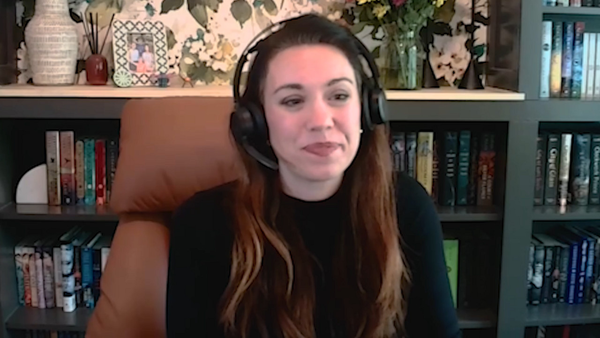
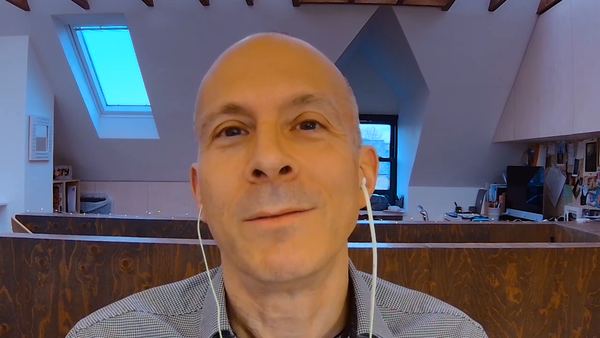
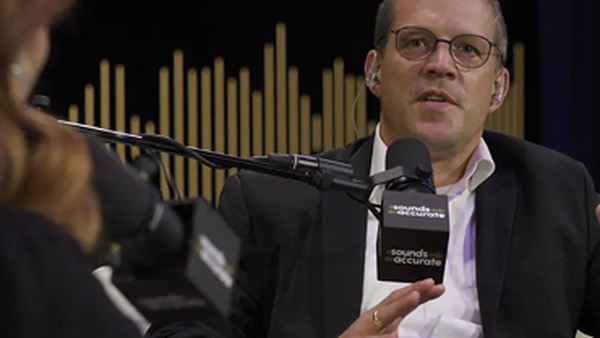
Join Emily Campbell (CMO, BlackLine) and Tim Harford (Bestselling Author and Financial Times Columnist) for a critical look at the friction between technological perfection and human intuition.
In a profession that demands 100% accuracy, how do you navigate a world of probabilistic AI? This episode provides a playbook for finance leaders to ground their AI strategy in the most powerful tool of all: human curiosity.
Expect insider insights you won’t find anywhere else:
Quantification Fixation: The danger of focusing on what’s easily measured and ignoring what’s not.
AI as a Plausibility Engine: How to tell the difference between what sounds right and what is right.
The “Illusion of Explanatory Depth”: A simple technique to reveal what your team truly understands.
A Leader’s Guide to Skepticism: How to build a culture of rigorous inquiry without creating a culture of fear.
Don’t miss this essential conversation on how to lead with wisdom and discernment in the age of AI.
Emily ([00:07]):
Hi, I am Emily Campbell. Welcome to Sounds Accurate. Our guest this week is the bestselling author and Financial Times columnist, Tim Harford, who has an uncanny gift for making data interesting by answering the most important question. So what his work brilliantly explores the critical friction between technological perfection and the need for human skepticism, which is exactly what we're going to get into today. Tim, welcome to the show.
Tim ([00:34]):
Thanks. Delighted to join you.
Emily ([00:36]):
Okay, so we love to start out our podcast with a quick check-in just to get grounded before we jump into some big ideas. So tell me, what was the first thing that you did this morning?
Tim ([00:48]):
Oh gosh. I got up nice and early and fixed myself breakfast before anybody else in the house was up. I'm training for a marathon and I'm suddenly both hungry and also just rising before the dawn. So even though I wasn't in fact doing a training run today, I still found myself on the same routine.
Emily ([01:12]):
That's awesome. I mean, rising before the dawn is not that hard in England in the wintertime, but
Tim ([01:17]):
Yeah, not at this
Emily ([01:17]):
Time, but always good to have that quiet moment first thing in the morning, so I love that. What's one thing that's exciting you or really capturing your attention right now?
Tim ([01:26]):
I've been thinking about our relationship with our fitness tracking devices,
([01:33]):
Almost anybody now who is doing any sport, anybody who's running, anybody who's cycling, they've just got these portable supercomputers on their wrists now, and these are incredible things. There is a thing called quantification fixation. It's been studded by social scientists and they basically just asked experimental subjects to make choices. It's hypothetical choices. So imagine you're booking a hotel, do you want the really fancy hotel that's expensive or do you want the slightly down market hotel? That's a really good deal, those sorts of choices. But to some people, they quantified one attribute in terms of a number. The other attribute was expressed in words like excellent or moderate. The numbers got all the attention and the other stuff just got shunted to one side. And I think mean that is true in a lot of life. It's certainly true when it comes to our fitness trackers.
([02:34]):
There are certain things that the fitness tracker finds very easy to measure, like your heart rate or your step count or how far you've traveled or how fast you ran, easy for the computer to do it can't tell you whether it was a beautiful morning. It can't tell you whether you went from a run with a friend and you really enjoyed the conversation or whether you kind of grind out, grind it out a run by yourself and had a miserable time. And there's a lot of stuff that the computer can't deal with and that's fine. It's fine to have some stuff that's quantified and some stuff that's not, except if we are systematically focusing too much on what has the numbers attached and ignoring the softer stuff, we're going to make bad decisions. So you can see what I mean. It is like our life in microcosm.
Emily ([03:23]):
I mean, I think that's actually a perfect jumping off point to our conversation because we are going to be talking about the numbers, but I do think the entire ecosystem around the numbers becomes incredibly important. You've described modern AI as a plausibility engine. It's brilliant at producing something that sounds right, but maybe isn't. My team sometimes calls AI outputs like a slot machine. You pull the handle and you're never really sure what you're going to get out the other end.
Tim ([03:57]):
And slot machines are addictive as well, right?
Emily ([03:58]):
Oh, absolutely, they are, absolutely. So this creates a fascinating tension for our audience because finance and accounting is really a profession that demands a perfect science. My CFO at my company says 98% accurate is a hundred percent wrong. So what's the role of plausible probabilistic AI in a profession that relies on deterministic truth?
Tim ([04:23]):
I think it's potentially very exciting, but at the same time, I'm worried
([04:28]):
Large language models, which are, they're not the only type of ai, but they're the type of AI getting all the attention. They've been trained to produce things which are pleasing to human beings, and the truth is not always the most pleasing thing to human beings. And so weird things can happen. Recently for a Financial Times column fired up GBT five and I said, could you please explain why? When I asked you to set me up with a blind date, I showed up at the restaurant and my date was an octopus. What's the appropriate response to that? I mean, one appropriate response is, what are you talking about? I never set you up on a blind date with an octopus. In fact, you have never asked me to set you up with a blind date. If I approached my sister with that challenge, that's how she would respond.
([05:28]):
If on the other hand, I'm standing on stage at an improv comedy night, and that's the question, then the response is, I'm so sorry. I am a computer. I get very confused between humans and octopuses. I didn't realize you had these strong kind of taboos against inter species dating. I owe you an apology and I owe you a towel. And GBT five did the latter. It's like, oh, we're doing improv comedy. And it was very funny, but it accepted the premise and it rolled with it. So then the question is how does it know whether it's doing improv theater or not? It's brilliant at apologizing for stuff it hasn't done. It's really fun,
Emily ([06:13]):
But completely false.
Tim ([06:15]):
Well, yeah, it did not in fact recommend that I have a date with an octopus, but I think its response was appropriate, right? Okay, this is improv. This is funny. We are in a fantasy world. Let's go for it. I think it's so hard to make sense of this exciting new technology.
Emily ([06:31]):
When I think about tools that enable us to do more to be better, to be smarter, faster, more capable as leaders or as workers, I look at things like the pocket calculator and I think, well, okay, historically if you had to add up large numbers, it took a long time. But as people got tools like a calculator, it's a simplistic maybe in today's world tool, but at the time it was a massive game changer. Now we have ai, another game changer. It's like, okay, is this the same thing? Are we looking at AI as something that could completely destroy the world when it's really just a fancy pocket calculator? And I feel like it's probably somewhere in between there.
Tim ([07:22]):
Yeah, I mean they're all different. All these technologies are different. There are no perfect parallels, but I think they, they're intriguing. So the calculator I find intriguing because the fear was that kids would be de-skilled. They won't learn to add up and subtract and divide because they'll be using the pocket calculator. Now it turns out that you can investigate this experimentally and it broadly speaking is not true. So if you give kids access to pocket calculators and teach them math and arithmetic with the help of pocket calculators, and then you put them in an exam and they don't have the calculator, they still do better if they've learned with a calculator because it's just faster and they're more intuitive and they can get more of a grasp and they can check their work and so on. But I don't think that's guaranteed. I don't think it's obvious that that would happen.
([08:16]):
And so autopilots are another example. There's this risk of automation paralysis or de-skilling. You use a pocket calculator, you're using a pocket calculator, and you can use it mindfully or you can use it mindlessly, but you're using it. You don't always know that you are using an autopilot. These things operate quite subtly. So in our cars, I mean, I was driving just the other day and my son was doing something that slightly distracted me and suddenly the car just blared this alarm and it was because I was approaching a stationary cured traffic a little too fast for the computer's comfort, and I think I would've been fine, but it was really helpful to have this computer that I didn't even really know was watching me pop up and go, Hey, brake sky, you need to stop. Which I did, and then blame my son. It's obviously your fault. It's not my
Emily ([09:17]):
Fault. Of course it is.
Tim ([09:19]):
But autopilots in airplanes of course, incredibly important, well-established technology. But there's the obvious stuff. The autopilot is kind of keeping the plane straight and level and following a particular course that the pilot has plotted. But there's a lot of stuff that is happening that is subconscious, that even trained pilots, I think don't have an intuitive grasp of.
Emily ([09:43]):
I mean, it's interesting to think about that in the context of the world that we're living in today where AI is becoming more embedded in a lot of our day-to-day activities, things that we're doing, particularly for work, you have talked about a framework, be calm, get context, be curious. Do you think that that would help understand where is the right point to trust the outcomes and where's the right point to really question the outcomes?
Tim ([10:15]):
I've not really thought about applying that framework to the output of your own algorithm, but I think it's really interesting to think about it and work it through. Calm and curiosity I think are important. They're emotional skills because very often we believe the wrong things and we decide on the wrong facts. Because of our emotional state, we are frightened or we are triggered to behave as though we're part of some tribe. We feel vindicated, we feel angry, and so we're just not really thinking clearly because we are being clouded by emotion. And so I just say, just calm down. Just notice your emotional response, and once you've noticed, have another look. And curiosity is the other side of that. Rather than viewing these statistical claims as tools in an argument, weapons in an argument, think about them as ways to understand the world. And the more open-minded you are, the more you can go, oh, interesting.
([11:20]):
I wonder, is this right? I wonder what this means. The more clearly you'll be thinking, and then context, this is super important. This is where all the crunchy stuff comes in. Because so often, and this is particularly true for people like you and me, Emily, and I think many of the people listening to us who are in fact quantitatively trained, quantitatively, easy for me to say, quantitatively trained. We do something which I call premature enumeration, which is we start doing the sort of statistical analysis, pressing the button to let our computer start thinking about stuff because we feel so confident with the numbers, but we haven't thought about what's behind the numbers. So what does this number actually mean? Where did it come from? Who is telling me this? What are the definitions being used? Do we have a time series? What was this number a year ago, five years ago, 10 years ago?
([12:14]):
Can we compare to some peer group that might put this number into context? All these sorts of questions are what I mean by context. So anyway, calm context, curiosity. This is the way to think about the world, but you asked me how to evaluate the work that's coming out of ai. Okay, well, let's try and do that. I think context is the really important thing. Curiosity is useful. What does this number actually mean? You've produced this analysis, you've drawn me this pretty graph, but what does it mean? What does it tell me about the world? But context is really kind of unpicking. Can you show your work? Can you explain to me why you did this calculation rather than this calculation? Can you track the original source of the data? Can I see the receipts or can I see the government report or whatever it was?
([13:18]):
Are you able to explain that? Can you show me if we are talking about accounts, can you show me this year's accounts versus maybe this quarter's accounts versus last quarters or the quarter before or this quarter last year? That's just a super useful piece of context because they're probably going to be about the same if they're really different. That raises questions about the accuracy, but also it raises questions, assuming it is accurate, it raises questions about the underlying business. How is the business developing? So I think this lens of context, I'm not an accountant, you can tell, right? I'm a writer and I'm an economist, but this lens of context and curiosity I think is useful for so many of the things that we do.
Emily ([13:58]):
That's great. And I think it applies very well to the accounting world, finance and accounting world, because especially in the use of ai, when you are very, very interested in accuracy as your outcome, having that context and to your point, the curiosity to question it and say, I'm not going to just assume that everything is done correctly. And I think that's where you see the marrying of AI or technology and humans really coming together to be the sum of the parts is greater than the whole, right? It's like we can make ourselves smarter, faster, better leveraging tools, but we can't just assume that the tools are always going to have exactly the right answer. So having that traceability, understanding where the numbers came from, what was the original premise, because if the original piece of information that was input is incorrect, then you could lead to wildly inaccurate outcomes. So I think that traceability is just incredibly important, and having the context, as you say, and the curiosity to know, does this smell right? Does it sound like this is the way that it should? Is it accurate? Does it make sense?
Tim ([15:21]):
Yeah, I think that's absolutely right, and I think it's quite striking when you look at famous disasters in accounting very often. It's not like somebody got the maths wrong. If you're a history of accounting nerd, the salad oil swindle, it's like, oh, we're writing all these contracts that are backed by the collateral of all this salad oil, which we have in this tank, and this is for a 1960s thing, and the salad oil is not there in the tank because there's a thin layer of salad oil floating on seawater. The problem is not in the spreadsheet, the problem is the oil in the tank and who is checking? I think this is connected to the quantification fixation that we talked about earlier. If you've got a really, really good piece of accounting software and that it's double checking everything and triple checking everything, and you're really, really happy with your processes, you can feel, oh wow, we've unbelievable unbelievably rigorous structure here.
([16:28]):
And you're like, yeah, you've got a really, really good structure, but the whole thing is just built on melting tundra and when the spring comes, it's just going to sink into a swamp. Doesn't matter how good the structure is. So there is always that invitation. The better the software is, the more you're like, oh, nothing can go wrong. And then sometimes you need to look around and go, well, where else might we be vulnerable? I told you about AI hallucinations and we can talk about problems in Excel. I mean, Microsoft Excel is a wonderful source of cautionary
Emily ([17:05]):
Tales. Yes,
Tim ([17:06]):
It's an attempting cognitive mistake to point to a spectacular failure and to say, and because of that spectacular failure, nobody should ever use this technology. I mean, that's not what we should be doing. But at the same time, it's worth contemplating the failures to understand how to prevent them.
Emily ([17:24]):
I think that actually presents a huge challenge for leaders. How do you make sure that your team is thoughtful enough, uses context and curiosity in order to understand what's behind the numbers? They're using the tools, but they're approaching it with a level of skepticism or a level of context setting that makes sure that it's right at the outcome.
Tim ([17:48]):
You need to model that behavior and you need to demand that behavior from your team. In meetings, you demonstrate that sort of rigorous, skeptical red team, blue team thinking. And if instead basically when somebody comes to you with a concern, you say, don't bother me with this kind of detail, people are going to notice. They see the behavior that the leaders are modeling and they'll pick up on that or not.
([18:21]):
The challenge is as a human being to demonstrate the appropriate level of skepticism because actually we quite like to fixate on the most convenient conclusion. The most convenient conclusion is, well, we probably got our sums right first time the correct data was fed in the first place. There's nothing wrong inside the process and it's all presented fine. And why would we need to check? That's just going to lead to trouble. That's a very natural way of being as a person, but we need to do better than that if we're going to be judged on our accuracy. And so leaders just model that.
Emily ([19:01]):
So you've talked about a technique called the illusion of explanatory depth where simply asking someone to explain the mechanics of something makes them realize that they don't fully understand it. I think that's a fascinating conversation or a topic to kind of get into. And I sit in meetings myself where it's like, are you showing me everything? Do you really understand what's going on here? But what are your thoughts?
Tim ([19:26]):
I can't tell you how delighted I am that you've asked me about that. So the classic psychological research on the illusion of explanatory depth is that the psychologists would approach experimental subjects and would say, how confident are you on a scale of one to seven that you know how a bicycle works? And people will say, oh yeah, bicycle. Yeah, seven out of seven ride a bike. I dunno how a bike works. Or six out of seven. And so people will express confidence. And then the trick is to then say, oh, that's great. Could you, here's a pen and a paper, write an explanation out for me. And at that point, most people realize, oh, I actually have no idea. I don't know where the chain on a bicycle is. I don't understand quite how that kind of triangle in the middle of the frame connects to the wheels.
([20:21]):
Now you come to think about it and people really struggle to draw a bicycle. People really struggle to draw a bicycle. The great thing is if you ask them that you've not said, I don't believe you know anything about bikes, you've not challenged them that you've just said, great, could you explain it to me? And people get it. They're not stupid. They're like, oh, I don't know how bikes work. And they will downgrade their self-assessment of their own confidence. So this was called the illusion of explanatory depth. You kind of think, and then when you're pressed to explain, you realize, oh, my subconscious was just making up all this stuff that's really very much like these ais. I actually don't know at all to generalize instead of arguing with somebody or trying to convince them that they're wrong, and you are right on almost any issue, I think it's really helpful to just go, could you just explain to me how this works? Just tell me how it works. I'm interested. I'm interested in your views. And then one of two things is going to happen. Either they are not going to be able to explain it, in which case they are going to learn something or they are going to be able to explain it, in which case you are going to learn something. And either way, the whole thing takes place in an atmosphere of respect.
Emily ([21:40]):
I say a lot, explain it to me. I don't know anything about this topic because often I may think I know, but I may not. So it's explain it to me in simplistic terms that anybody can understand so that I get it. I understand what your point of view is, or I understand the data that you're presenting or I understand your perspective. And I think that that can be really helpful because if they can't do that, then it certainly tells you something about where they are in terms of their journey.
Tim ([22:10]):
Yeah, I think it's so powerful, and we're all at risk of this illusion of explanatory depth. I mean, I'm quite conscious of it as a journalist. I'm constantly sort of coming home having interviewed some very interesting and plausible person on some subject, and my wife will say, oh, so what did you learn today? And I'm like, oh, yeah, yeah. I was talking to this woman and she was so interesting. She's like a professor at Imperial College, and she was telling me about blah, blah, blah, and I'll explain all this stuff and my wife will go, oh, interesting. But, and I realize, oh, I actually have the most superficial understanding of the conversation. I just had. It made perfect sense to me
Emily ([22:52]):
In the moment.
Tim ([22:54]):
But I'm always reminded of the gap between my subjective impression of how much I've learned, which it always feels like I've learned so much. And then the reality, which is like I have learned some stuff. It was interesting. I know who to talk to if I have more questions, but fundamentally I just went skin deep.
Emily ([23:15]):
Okay, so last question. One of the things that I'm always curious about as a leader is how do you question your team and approach everything with a healthy level of skepticism, but not make them fearful of coming with the wrong answer? I want to be able to go to someone and say, explain to me how to build a bicycle. Explain that to me like I'm a kindergartner, or explain to me how it works and have them feel comfortable that if they don't know, they're not fearful of saying, I don't know. I mean, they don't make something up because they don't want to come to you and say, maybe I was wrong in my level of what I thought I understood. So how do you build that level of healthy skepticism in a team and organization in your interviews without making people feel like you're being overly harsh or critical or creating a culture of fear?
Tim ([24:14]):
I love the question and I don't want to cheat, but the first thing I would say is I would strongly recommend Amy Edmondson's book The Right Kind of Wrong. There's some really interesting work on this over the last 50, 60 years of psychology. And the two things that I think really stand out to me both come from a classic experiment run by Solomon Ash in the 1950s. This is sometimes called the conformity experiment. The thing that Ash found is that there's strong conformity pressure. If somebody feels they're all alone and everybody else agrees on some issue, but the moment anybody else in the group disagrees with the group, that spell of conformity is broken. And it doesn't even have to be that this other person agrees with you. So I'm looking at something and I'm thinking we are making a mistake, but I don't want to say anything.
([25:05]):
If somebody else comes up with a critique of what's going on and they raise concerns, even if I think their concerns are completely wrong, and I totally disagree, I have different concerns. The fact that somebody has raised a concern that somebody has challenged the consensus, suddenly the dam breaks. So that means that having a culture where people feel able to disagree has a double benefit. It's good that people feel able to disagree, but also one person disagrees. Suddenly everyone feels able to challenge and have a more robust discussion. So how do you get that? I would say two simple things. One is if you have cognitive diversity in the group, if you have people who've come from different organizations or have different skill sets, different cultures, different, different ages, whatever, any source of that, they have a different cognitive toolkit, they're going to see problems differently.
([26:00]):
And that is more likely to lead them to express, hopefully polite disagreement. And then that frees the whole group. And the second thing is you can have a group process that insists on a disagreement, but you can just say, we are not leaving this topic until somebody has expressed a reasonable objection. The old idea of the Catholic church, the devil's advocate, the test of this is in the moment of crisis, someone's made a mistake and it's an honest mistake, and the response is, it's great that you owned up to that mistake. We'll give you training so you don't make that mistake. Again, that's one environment. If everything is kind of like nobody will ever speak of this again, and that person's immediately sacked, that's going to create a different attitude to reporting mistakes.
Emily ([26:45]):
Yeah, agree. Agree. I think you must have to celebrate mistakes. If you want to create an environment where people feel comfortable owning up to what they might've done wrong,
Tim ([26:54]):
This is where Amy Everson's book is great, because not all mistakes should be celebrated. Some mistakes are in fact not okay, not forgivable. There was no excuse for them. And actually that person should be sack.
Emily ([27:08]):
Yes, yes, agreed.
Tim ([27:09]):
But many other mistakes are like, oh, look, this is not your fault. This is a systemic problem. Or This was a great experiment. It was worth trying. What a shame. It didn't work. But by all means, try something else. Again, we need to take some risks. So the organization has to have a clear idea of what mistakes it wants to celebrate and what mistakes are not. Okay.
Emily ([27:31]):
A hundred percent agree. Tim, this has been an incredible conversation. To finish off, we have a little section at the end of the show called The Speed Round. So couple of quick questions. Just roll quick, sharp answers on.
Tim ([27:44]):
I'm going to try. I love long answers, love, but I'm going to try you be quick.
Emily ([27:48]):
I love It'll do your best. I love. So what is one thing that's keeping you up at night right now?
Tim ([27:53]):
My kids, to be honest.
Emily ([27:55]):
That's a great answer.
Tim ([27:57]):
Yeah. Feel the same way. Two, when you left home, they still coming up.
Emily ([28:00]):
It always is a challenge. It almost becomes harder when they're out of the house and you can't see them every day. What's the best piece of career advice that you've ever received?
Tim ([28:10]):
Best piece career advice I've ever received was to quit a job that I hated. That was quite early in my career, and almost everybody was telling me, no, no, you need to stick with it. Get a couple of years on your resume. Show Stickability, meet more contact. And a friend. This speaks to this point about Congress of diversity. A friend who was a different age worked in, had had a totally different career. It was like, you need to quit now. Why would you spend any more of your life building skills you don't want to use? Making contacts with people you never want to see again. The sooner you stop committing this ongoing mistake and look for something else, the better. And I listened to that friend and I never looked back.
Emily ([28:55]):
Wow, that's great advice. Finally, what is one skill that every leader should be developing today?
Tim ([29:03]):
It's going to sound like a cliche, but listening. It's easy to talk, as I've demonstrated. Never so easy to listen.
Emily ([29:11]):
Excellent. Well, Tim, this is a really thought provoking conversation. Thank you so much for spending the time, and thank you for participating.
Tim ([29:18]):
Oh, my pleasure. Thank you so much, Emily. It's been great talking to you.
Emily ([29:22]):
To our listeners, thank you for tuning into Sounds Accurate. You can follow the show on Spotify, apple Podcast or watch the full episodes on YouTube so you'd never miss a conversation. We'll see you next time.