SOUNDS ACCURATE: A BLACKLINE PODCAST
EP2: Prediction vs. Precision: Why AI in Accounting Plays by Different Rules
Why can't you apply the same AI strategy to both your forecasting and your accounting teams? The answer lies in the difference between prediction and precision.
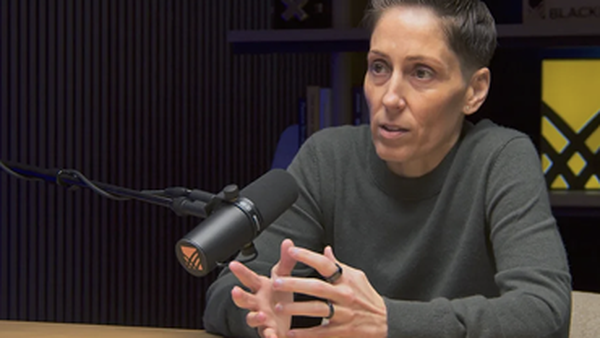
This week, Emily is joined by Cheri Hewlett, Global Managing Director and SVP at BlackLine, to break down why the world of accounting requires a specialized approach to AI. They discuss how to overcome the common hurdles of data quality, the "black box" of AI, and building trust within your team.
In this episode, you will learn:
How to ensure the AI you adopt is built on a foundation of control, not just flexibility.
What to do when AI exposes the hidden gaps in your data and processes.
How to move beyond measuring hours saved and start measuring true strategic impact.
Emily Campbell ([00:07]):
Welcome to Sounds Accurate, the BlackLine podcast where We explore the future of finance and accounting. In today's episode, we're diving into a crucial and timely topic. One size doesn't fit all in finance and why AI plays by different rules for accounting. AI is being adopted everywhere in finance, but not all parts of the business can move at the same pace. What works well in the world of fp and a, which lives in probabilities and forecasts, doesn't always fly in accounting, which operates on fact proof and absolute precision. Here to help us navigate this tension between prediction and precision is Cheri Hewlett, the global managing director and SVP at BlackLine Cheri, will help us understand why trust data quality and measurable ROI, the defining deal breakers in AI finance and how leaders can bridge the gap between AI's promise and accounting stringent demands. So Cheri, to start set the stage for us, why is it so important to distinguish AI for forecasting and AI for counting? What's the fundamental difference?
Cheri Hewlett ([01:15]):
Well, I think the fundamental difference is just in the difference in finance and accounting where what is the objective and what are they trying to accomplish? And when you're trying to maintain control and accuracy and completeness in your financials, there's a different method to how you're looking at automation. When you're looking at finance, you're looking for flexibility. You're looking for less control. You want it to be based on control, but I want to be flexible. I want to see different scenarios. I want to do different predictions and forecast models. So I think it's just the foundation, a foundation of control versus a foundation of flexibility.
Emily Campbell ([01:53]):
It's almost like when you're forward looking, you want to see the possibilities, but when you're looking at the past, you want to see the facts and think about the facts. Yep. Interesting. Interesting. So what is the biggest misconception that finance leaders have when they're going into their journey with ai?
Cheri Hewlett ([02:10]):
There's almost a shock of the level of accuracy and structure of the data that they're planning to build AI on top of. I think AI does a great job of exposing those gaps. And so that's usually what we see is the misconception is that AI is just going to fix everything and then I don't have to do anything. And the reality is it's just going to expose the things that you need to fix.
Emily Campbell ([02:33]):
Yeah, agree. I mean, you've talked about AI is useless without transparency. Tell us a little bit more about that. What is the importance of transparency when it relates specifically to AI versus any other finance activity?
Cheri Hewlett ([02:48]):
So I'm pretty sure any accountant, as a former accountant myself would relate to this is I'm going to do the work over again because I trust myself more. And if I can't see what the ai, the thought pattern of how this AI came up with this answer, I'm not going to trust it and therefore I'm going to continue to do it on my own. So that transparency is also the traceability of how do I know that it factored in all the points that needed to be considered when it made this decision so that I can begin to trust it.
Emily Campbell ([03:21]):
So it's not just transparency in the data from the very beginning, it's also transparency in the process of the data transformation.
Cheri Hewlett ([03:30]):
What were the considerations that were made and how did you conclude that this was an anomaly? What if I disagree and I need to have that kind of level of trust? And I think we're going to see that for a while as accounting starts to develop the same trust that maybe finance has already gotten.
Emily Campbell ([03:45]):
It also seems like in a typical AI model, there's often this black box where data is processed very much behind the scenes and doesn't give a lot of visibility to how the answers are being developed. How do you see that black box evolving in the accounting space? And again, relating back to transparency, how do we position or how do we make sure that we're clear on what's actually happening?
Cheri Hewlett ([04:15]):
I think you kind of touched on it. There's two points. There's one is exposing the chain of thought. I want to see what did you look at? What considerations did you make? What did you not make? But I also want to see what data did you use? I want to get to that data. I want to know what was the data source behind the scenes that you used to look at and scan? So I think it's both the data source and data transactional level metadata exposure, but also the process transparency.
Emily Campbell ([04:45]):
What does it mean to truly own the data governance, both from a finance and accounting professional, but also from an AI perspective? How do we manage and control the governance behind these AI models that are being created?
Cheri Hewlett ([04:58]):
Well, there's a couple things is it depends on going back to the original of accounting versus finances is what is this being used? And if you think of just your org structure, you have a financial analyst and then you have a AP payroll specialist, or they operate very differently, they look at things very differently. They're trained very differently. So looking at it from the perspective of if I were an accountant and I were using this data, what would be the things and the steps that I would've followed in order to be able to trust the output? Because I think the governance in accounting is not just the data, it's also the process is what did we do with that data? Because at the end of the day, that's what matters. It matters. How did it land in a journal entry? How did it land all the way up to my financials? And that's what did we do with this data? Did it land on complete inaccurate financials in the end? So I think it's the traceability from the very beginning of the data and following the life cycle that data, and then retaining that so that I can see how it moved and make sure that everything followed the right compliance steps.
Emily Campbell ([06:05]):
I mean, we hear all the time about people asking Che GPT for medical diagnoses or legal rulings, and then just finding out what came out at the end of it was not even vaguely correct. And so I think that traceability piece is extremely important. It's interesting. A lot of companies that I'm seeing are measuring the effect of AI on the number of hours that are saved, and I think you've said, Hey, sure, that's great, but that's not how we should be measuring. But really thinking about the impact of what's happening. Expand on that a little bit. Tell us a little bit more about what you mean by the impact measurement.
Cheri Hewlett ([06:49]):
Yeah, so there's a couple of ways. I mean, you could say that the impact is it's removing risk because I mean, if you think back to the calculator, if I put three plus two, I know it's going to tell me the right answer. It took us a while for us to develop that level of trust and now we can put anything in a calculator and trust that it's going to give us the right answer. I think it's going to be the same thing that we're seeing in accounting is that kind of developed level of trust that then returns itself in more efficient, but also impacts the bottom line of your business. If I can be more efficient, I can make faster decisions. I think also the impact is just competitive nature. If you are a business and your team is not really leveraging AI and your competitors are well, they're going to produce faster, they're going to produce more efficiently, they're going to make more strategic decisions. And so I think from a competitive landscape, all businesses right now are in that space of we have to work more strategic but also more efficient and not one or the other. It has to be both. So I think we're seeing the impact that AI is unlocking a level of creativity. It's helping people think outside of the box. It's helping them think how to do things faster, but also how to do things better.
Emily Campbell ([08:11]):
Some of the accountants that I have known, you get to the end of the month and you have multiple days of just go as fast as you possibly can. And so the idea of being able to take a breath during the close and actually think about what you're doing uplevel and be a little bit more strategic from an accountant's perspective, I think is pretty enticing for a lot of accountants out there.
Cheri Hewlett ([08:33]):
Yeah, I think we are luckily coming to the end of the month end scramble. I think those organizations that are starting to adopt AI in a way because of the nature of being able to do and the demand on the market to do things faster, now I can do things and rely on them just because of the speed of technology. I can get data faster, I can process data faster. So the sooner that we can develop that foundation of trust in our data and in our processes in the governance, I think you're going to see a lot faster processing, but it is just going to be something that takes time
Emily Campbell ([09:07]):
Instead of the month end close. It's a daily close. What a great theory. It's like, this sounds amazing closing. So I think the other thing obviously with this is as we think about this strategic shift for accountants and kind of moving away from that crazy month end close, we're going to be freeing up some time and people are going to be able to do things that they've never really had time to do in finance, especially on the accounting side of finance and accounting. What are some of the things that you would expect to see an accountant like you used to be doing with some of this freed up time?
Cheri Hewlett ([09:44]):
I remember the days of going in and calculating journal entries and manually doing reconciliations instead of looking at what we are doing as a business instead of looking at the opportunity in the market, being able to address areas that we could expand into. How can we improve the experience? What type of investments can we make? So I think that there's that side. There's also the increase in the regulatory and compliance requirements that are happening that is just making people even more busier because now I have to do the accounting stuff, but I also have to do all of my different new reporting requirements. So I think that there's going to be a balancing that happens, that there's going to be a shift to managing regulatory requirements, but also just being able to think and add more value into the direction that the business is going.
Emily Campbell ([10:36]):
I really appreciate that. I mean, I think that the idea that it's not just about saving money or getting rid of roles, but really around upleveling your staff and making them more effective, more efficient, more strategic in their approach. And I think you mentioned the regulatory piece is it's such an evolving state at this point, and especially if you're operating in a multinational company, keeping up with the regulations can be complex and difficult. And now with additional reporting requirements that are coming out pretty regularly, making sure that we're actually accounting for those elements and delivering against them is really critical.
([11:19]):
We have challenges with data quality in a lot of the precursor data, and I know that that's a big topic when we talk about AI in accounting is how do we make sure that our data is actually structured appropriately so that an agent can come in and complete this work? I know many times an accountant just knows that that journal entry is not going to be in the place it's supposed to be, or that piece of information is not where it's supposed to be. What recommendations do you have for companies as they're contemplating their own data structures even prior to implementing AI capabilities?
Cheri Hewlett ([11:59]):
From my own experience, what I've kind of run into is an agent's going to operate the same way that a new employee would operate. So if you can't have a new employee come in and follow some sort of documentation that tells it what exactly to do and under what circumstances as a starting point, then you can't expect an agent to be able to do that same thing. And that's when you start to get hallucinations because it then kind of goes rogue on you. So I think the best starting point is to make sure that you understand what these processes are. You understand what these handoffs are, you understand what that accountant is doing, where are they getting that data from? Where are they doing to it? Are they doing any sort of enrichment? Are they doing any sort of transformation to make it usable? Because I think there's the raw data and then there's the contextualized data and what are they doing to get it to become contextualized, and then what are they doing it? What are those steps that they're following? Because I think even when you're looking from the backend at anomalies, how did you determine that this was anomaly? There is a train of thought that's happening, and I think the more that organizations can start to understand the processes and document that, then they can drive a lot easier and faster. When it comes to intelligence,
Emily Campbell ([13:17]):
I always think about any sort of transformation as people process and technology. And so you obviously, we've spent the majority of this time talking about AI and AI technology, but I do think the people and process piece is a really critical one. So let's talk about process for a second. I mean, what are the elements of process transformation that you think AI either unlocks and enables or need to be accounted for when it comes to leveraging AI as effectively as possible?
Cheri Hewlett ([13:49]):
Well, I think that naturally if organizations look at their teams and how they're structured, or even if I look at my own team and we're all off kind of doing our own thing, we don't really fully know what everybody else is doing, but there is a level of overlap. There's a level of, Hey, we're sitting here today and we're having a conversation. I think that is the level of transformation where it's not just one person. It's not just one step that's happening. We're all doing our piece separately, and then we're coming together and doing sort of a handoff, whether that's through a conversation, whether that's through meetings, whether it's through the shared objectives that we're reaching. So when you're looking at process, it's not just from my point A to point B, but the full entire point A to point B. Where are we starting?
([14:36]):
Are we starting with raw data across a hundred different systems and where are we trying to get to? And that's all the way through to your reporting, your finance, your forecasting, your budget, and that's your real point A to point B, not just within one team. So I think as you look at the full process, I want to know where does that, what's the flow? If I had to follow the data stream, where does it start? Where does it end? And then you get a full understanding of your entire process and how you can apply AI to that.
Emily Campbell ([15:07]):
From a black line perspective, I think one of the things that we focus on a lot is that process and really understanding and mapping the process. I think once you have that mapped out, you can start to say, this is where I can apply ai. This is where I can apply AI in order to accelerate and move things forward. You mentioned hallucinations, and that's obviously I think one of the, there's the promise of AI where it's like this golden world where everything's perfect and happy, and then there's this hallucination problem, and I think that's, for most CFOs, that's terrifying. It's like how do we stop that from happening? I know there's more of a challenge with hallucinations when you're using more generic AI system, but talk a little bit more about hallucinations, how they occur and how we can stop or largely prevent them from happening.
Cheri Hewlett ([15:57]):
Hallucination is just really the lack of training and therefore just kind of comes up with something. And there's a couple ways that you, you mentioned generic ai, and I think that's an excellent way to start because if you look at, Hey, could I take somebody that was an expert in accounting and just make them an engineer? No. And the same applies to could I do that in ai? Can I have, there's one agent that does everything and they're an expert in everything. No, they're going to produce hallucinations. They're going to give you false outputs. The risk there is if I think back to my days of I'm in month close, I'm going to try this technology one time, and if it gives me an output that's wrong, I'm not going to go back. And so you develop an adoption issue, and that's where you start to see a loss in your investments because you're investing in this technology because it has ai, but you're struggling to get users to adopt it because it's not producing correct information, it's not producing correct information because it's not trained on what correct looks like.
([16:57]):
So going back to understanding what this process is, if you can't articulate that train of thought, if you're telling me that that train of thought lives in somebody's head, then an agent's not going to know it either. If we can't transfer from one human to another, then we can't transfer that knowledge to technology either. So you have to have almost like a written guidebook for your agents to be able to operate. So think of somebody doing accounts payable well, they need to know what accounts payable is. What am I looking for? What's my objective? It can't just be, Hey, you're just an accounting expert. It has to be even more specific than that, and even in some cases, understand the business. Are you in retail? Are you in financial services? The way I do my accrual might be different. I don't want a generic accrual set of advice because then it starts to give false information that is, you run the risk of I use this false information, or my information is wrong, or my decision is based off of bad data, or you run the risk of your team not using it. They're not going to trust that it is responding back bad. So I'm going to go back to my old ways. So both are a risk and both lead to risk in your return on investment, but also just the risk on your accuracy and your completeness, which is what you're trying to use AI for in the first place.
([18:18]):
So both sides.
Emily Campbell ([18:20]):
Yeah, so it feels like we have process which we need to have fully documented and understand exactly what we're trying to accomplish makes a ton of sense. We have data where we have to have our foundational data that's accurate and ingestible, and then we have to have AI tools and capabilities that are specific for the task that we have at hand and not try to make one agent do everything. Would you say that's the recipe for success, or what are other pieces that you think we need in order to make that the whole AI proposition really work?
Cheri Hewlett ([18:57]):
Yeah, I think the data layer, the guidance, the layout of what are you actually doing? What do you need this agent to replicate as a starting point, at least I think the intelligence will grow from there, but giving that as a good starting place. But I think the biggest area that's overlooked is just the change management. I think that there's a big curve of you used to do it this way and we need to start doing it this way, and that's going to take some time. I mean, when you look at accounting, it's very routine. Every month in every quarter in I'm doing these things, and now you're asking a shift in a time that's already hectic. You're asking them to adopt something new. So there's going to have to be some attention that's put in place for that change management. There's also going to have to be attention and a level of tolerance and acceptance for, it's not going to be right, right away, but until you continue to use the information and say, Hey, this is retrieving the wrong information. What do we need to change in our underlying structured process to make it more clear? There's going to be that tuning process that happens. It's not going to be, Hey, we turn on ai, all of a sudden everything's automated. So I think there needs to be a commitment and an understanding of that change management that's going to come into place. But if they can commit to that and parallel make sure that their structure is in place, then our data is good, then I think the payoff is going to be significant.
Emily Campbell ([20:28]):
So a recognition at least that it's not going to happen overnight and that we really want to make sure that ultimately we are recognizing what AI is giving you, what it's not. It's not human taking the human out of the loop, but really making humans faster, better, smarter because of the technology that sits underneath it.
Cheri Hewlett ([20:50]):
Yeah, I can tell you as a CPA myself, I'm pretty sure no accountant out there went to school to be able to process spreadsheets. That wasn't in my desire when I went through school was, Hey, I want to go through and every month I want to update this spreadsheet and attach it and do reconciliation. So I think that there is the side of expanded job satisfaction and the internal culture uplift that's going to happen as well.
Emily Campbell ([21:19]):
If you're a CFO for a company and you're looking at the opportunity that is ahead of us in terms of AI as A CFO, how should they be thinking about this process and adoption of AI in their accounting space specifically? And are there things that they need to be wary of? Should they be jumping in with both feet? How do they handle some of the challenges that we've discussed?
Cheri Hewlett ([21:43]):
What I've seen is there's a split. I think that there's the pressure to use ai, and then there's also the gap in knowledge and just trying to keep up with what is different types of AI and how do I even evaluate AI in our space. So I think that naturally CFOs are usually operating at the planning and forecasting and budget side and understanding the connection and how valuable that upstream process is. Because I think from both sides learning where and what types of AI are out there and how they help, and not necessarily getting in the weeds, but just understanding, Hey, there's an end-to-end process here and we need to make sure that we're addressing and we're looking and doing a full kind of discovery of ourself. And I think the data part, you mentioned that, and that is critical. I mean, go into chat GBT, you can ask a question today and then ask the exact same question.
([22:40]):
It'll give you a different answer. So we need to make sure that that is in place, the criticalness of pushing your teams to define the process, get good data structure so that the bottom line is positively impacted, because if not, you are starting to see a loss that's happening from investments in ai. So I think that the awareness and keeping up with, to a certain extent of it's always evolving. I mean, we're talking today, a year from now, we'll be talking about more advanced technology. It's going to continue. And I think having that embracement of agility in technology right now is critical because it's just moving faster and faster and it will continue to do so.
Emily Campbell ([23:24]):
Someone on my team said to me a couple weeks ago, it's like, this is the worst it will ever be. It continues to get better every single day, and the technology is evolving so quickly that what we can do today with AI and different agents in our processes is just scratching the surface on where we can go in the future. So I think there's a huge opportunity for us here over the next couple of years, and I'm excited to see where we go. Me too. Excellent. Thanks for joining us for our second episode of our Sounds Accurate Podcast. Please come back and join us again. We'll be having more episodes soon.