EP6: Quest Playbook: From Centralized Accounting to a Center of Excellence
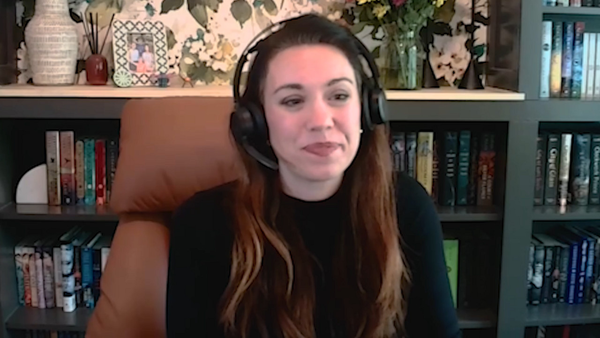
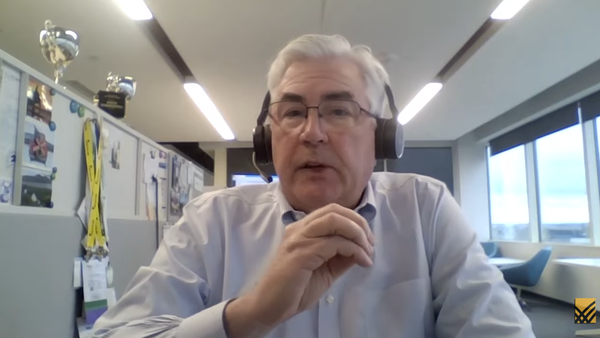
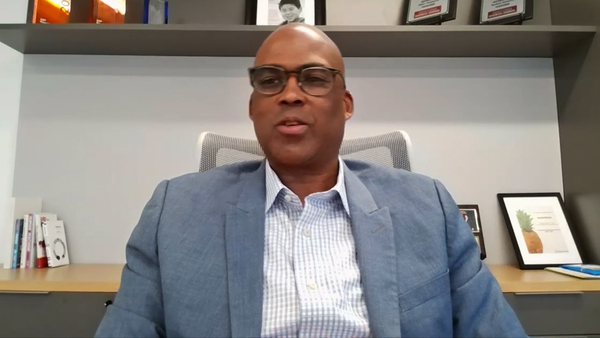
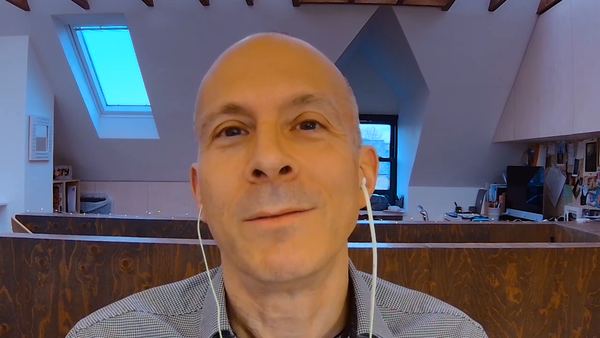
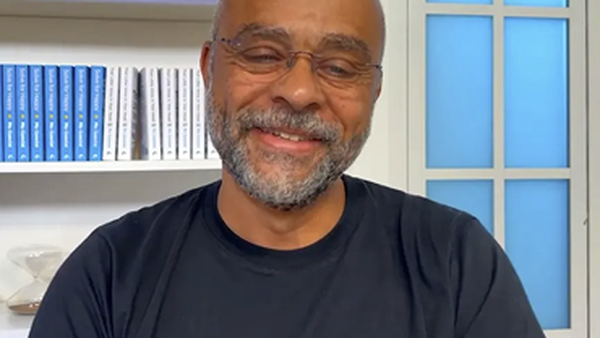
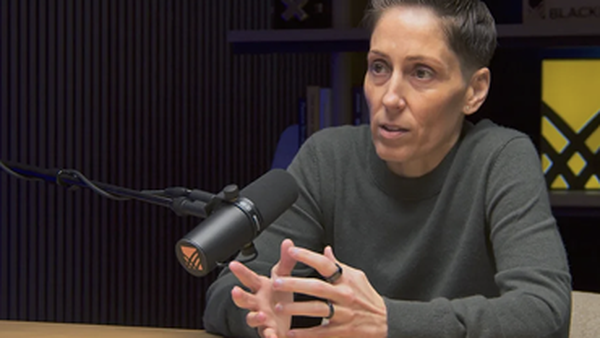
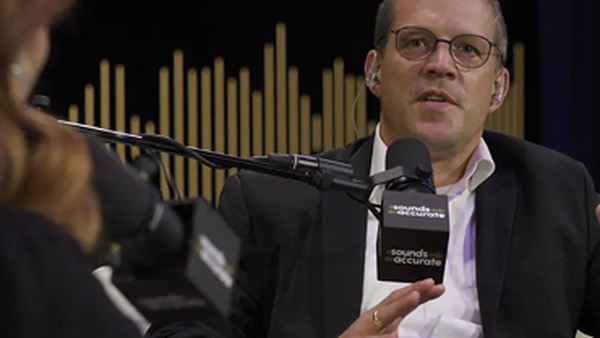
Join Emily Campbell (CMO, BlackLine), Michael Heeney (Controller, Quest Diagnostics), and Adam Dabbeekeh (Senior Manager, Centralized Accounting, Quest Diagnostics) for a look inside a real-world finance transformation.
Instead of following the typical path of outsourcing and offshoring, the team at Quest built a centralized accounting model powered by a “digital workforce.” They didn’t just cut costs; they created a blueprint for how the entire business could operate smarter and faster.
Expect insider insights you won’t find anywhere else:
Skipping the Middle Step: How Quest bypassed traditional outsourcing and went straight to a more efficient, technology-driven model.
The "Digital Worker": Learn how they combined automation and AI to move from hundreds of people doing a task to just tens.
Trust but Verify: The framework Quest uses to balance AI-driven automation with essential human oversight and control.
Speed to Analysis: How automating foundational tasks freed up the team to become strategic partners, delivering critical insights to the business faster.
Don’t miss this masterclass in putting transformation theory into practice and building a finance function that leads the way.
Emily (00:07):
It's one thing to talk about transformation, and it's another to actually build it from the inside out. My guest today is Michael Heeney, controller at Quest Diagnostics, one of the world's largest diagnostics information services company. Michael has spent years rethinking what the finance function can be, not cutting costs for the sake of it, but building something that makes the entire organization smarter and faster. He's joined by Adam Debika, Senior Manager of Centralized Accounting, who has been the execution engine behind that vision. Together, they took a team that was built for one purpose, centralizing work, and turned it into something far more powerful, an internal model of how the rest of the business could operate. Welcome, Adam and Mike. We're excited to have you here today.
Michael (00:56):
Thank you, Emily. It's great to be here. Thank you.
Emily (00:58):
Excellent. So before we dive into the deep end, we'd like to start our conversations with a quick check-in. So how did each of you start your day-to-day?
Michael (01:08):
Well, pretty typical day. The first 15 minutes, you have to look at email, figure out what you want to pay attention to, what you could ignore for the near term. But then the journey that we're on, I think we immediately move on to what is the art of the possible? What should we dream up next? And that's pretty much been what we've been working on for 15 plus years at Quest Diagnostics.
Emily (01:35):
That's awesome. I love that answer. Adam?
Adam (01:37):
After coffee and exercise, checking emails and seeing what my calendar looks like for the day. And really, it was just getting similar to Mike, just looking at what we can do and what we have to accomplish for the day.
Emily (01:57):
Awesome. So what's one thing either personally or professionally that's capturing your attention right now?
Michael (02:05):
Well, I think I could start out by saying that clearly everyone has heard about AI, including our CFO, and that has been number one on his list since pretty much midway through last year. So the finance team has been coming up with, here's some ideas, here's certain software that we're already using that have their agentic offering within. And I would have to say what is coming back from them in our senior management team is pursue it. And therefore the digital journey that we've been on, in my opinion, now gets a supercharge because that digital worker that we've been honing and getting into our operations now just got a super brain and that's great for us.
Adam (02:55):
Yeah. I have to echo what Mike is saying here. AI is really at the forefront of so many of our thoughts and what we're currently working on, looking to integrate the AI that we already have in some of our tools, learning it and starting to figure out how we can use it.
Emily (03:18):
And I know, Adam, that you have been a big proponent of using some of the Black Line Agentic capabilities, so we'll be digging into that in a little bit. But I think the AI transformation as it relates to the Office of the CFO, particularly at that top level, that was a really fast shift, right? I mean, it felt like there was, even at the beginning of 2025, there was still kind of a wait and see approach. And then as we moved through the year, I think throughout the finance and accounting organizations, just with many of the people that I've been speaking with, it's almost like a light switch went on and it's like, okay, how do we get this stuff today? How do we make it work? What has to happen in order to make it work? Is that similar to what you guys experienced?
Michael (04:03):
Oh, absolutely. So we were given some seed money early last year. What was the idea you had? And we actually partnered with some students at UC Berkeley to say, all right, here's our moonshot that we'd like to accomplish. They went off, they wrote us some algorithms and we didn't hit the moon. But what did come back was if we took it from, I'll call it a client level predictive model to a lab predictive model, it got pretty accurate pretty quick. So now the rest of our teams that are focused in that area now have their own data scientists, they are building their own algorithms. So it took a grain of an idea. Like I said, you try the moonshot first, but then you start to look at it to say, all right, with this level of, I'll call it accuracy, what else should we do?
(04:57):
What else could we do? And now, like I said, a data scientist and their team is looking at it to say, "Yeah, there is something here. Let's pursue it.
Emily (05:06):
" Awesome. So Michael, question that kind of leads from that. What were the pressures that made rethinking your centralized accounting team feel urgent rather than optional? And what was the business case for a larger transformation in your organization?
Michael (05:21):
So Quest Diagnostics from its inception was an acquisitive business. They started out small and just kept growing through acquisition. And I think pretty quickly people determined that with every acquisition, you didn't need to bring in a new controller, a new accounts payable, a new payroll. So centralization of the back office was something that was pursued. And when we did what we call our centralized accounting department, we were supported with some pretty cool enabling technology and shout out to BlackLine because that was one of the first. So we got our headcount arbitrage just like any financial shared service organization would do. But instead of the typical, okay, now let's outsource it to a BPO or move it offshore, it became evident pretty quickly that moving to a digital worker, maximizing the capabilities of the software, you bypassed any other step because it went from hundreds of people doing something to tens of people doing something with the assistance of the digital worker that we like to call it.
Emily (06:33):
So you skipped that middle part and went straight to a more fully realized vision of how AI could actually help you in your processes?
Michael (06:42):
Exactly. And it was so funny because I had come from a shared service background and that was page three or four of the playbook, centralize it, standardize it, rationalize it, oh, okay, and move it offshore. In this case, I think the technology finally caught up and Adam can talk to our auto certification rates, some pretty interesting uses of matching to handle workflow throughout our close. We actually use the matching in our bank accounts. I think I said matching, but I meant task manager
Emily (07:20):
For
Michael (07:20):
Our journal entries, our close. And you start to say, "All right, what else could this BlackLine tech do? " And I think some of the folks we talked to at BlackLine go, "Oh, that's interesting." And they look at each other. Did we ever think of that? Robots came in pretty quickly thereafter. And like I said, we skipped right to the, okay, spike the ball, you've gotten an efficient organization and oh, by the way, everyone's given license to challenge the status quo. Is there a better way to do it? And Adam lives and breathes that every day.
Emily (07:58):
Yeah. And Adam, that's actually a great segue. So tell me, give me a little bit of the ground up. How did some of these changes that Mike was just speaking about, how did they come to be in the organization? Can you give me a couple of examples?
Adam (08:12):
Yeah. I mean, the changes, they kind of came naturally because this is what centralized accounting, this is the foundation centralized accounting was built upon, was using the tools accessible to us and maximizing them, maximizing their usage. So for us, this was actually the fun part. We got new tools, new toys, and we started figuring out how can we use those? And that's the part of my day that I get the most enjoyment out of is finding better ways of doing things and maximizing the ROI that we get from these tools. So there was really no feeling of pressure from my standpoint anyway. It was just a matter of, it's just another day in centralized accounting. So as Mike mentioned, we've gotten our auto certification rate up pretty high. At one point, we're actually up to 80% and it dropped down to about 75 after a recent acquisition that we just put into BlackLine.
(09:20):
So we're slowly getting it back up into where we'd like it. But then with AI, that's the next generation of how we're going to bridge that gap between what we can do currently with the uploads and the current way that we're getting things auto certified and that next step, which AI is going to be able to get us there. So I'm really looking forward to seeing what these new technologies that BlackLine is working on, how it can really get us over that 80% mark and maybe even beyond.
Emily (10:00):
Yeah, that's what we're looking forward to seeing as well. And Mike, you mentioned use cases that you all are employing, leveraging our software that maybe even BlackLine hasn't thought of yet. And I think that that is an amazing story, first of all, but not one that we haven't heard before. We are consistently hearing from our customers that they're taking the tools and capabilities that BlackLine provides and actually implementing it in their businesses in a way that's very unique and specific, but could potentially be applied to a lot of different customers. So we're always excited to hear about new and interesting ways that people are using our matching capabilities, our journaling capabilities, because the use cases really are quite broad. And the way that we go to market with them covers a bunch of use cases, but not necessarily the entire gambit. So always interested to hear what people are doing with it.
(10:59):
That's exciting. Mike, you mentioned that your team has used robots. You mentioned robots, and I think that's kind of an early bridge of how AI ultimately works. And I know, Adam, you've mentioned that as well, but the conversation has moved on beyond that to AI and how you use AI in your processes today. So you're still early in your journey, it sounds like, as pretty much everybody is from where we came from to where we will be, say, in two, three years from now. But how do you see the balancing point between AI and that kind of human in the loop or the human judgment component? How do you see that balance happening?
Michael (11:43):
Well, I could talk about in general terms, one that we've just initiated, which is using our robots, using our stored data that is in PDF form and using the agentic to A, identify where the data is first. And then as soon as we located the 340,000 pages that had this information, we started using Agentic to pull the information and start organizing it. That's great. We're then going to have to actually put the human in the loop to do the analytics. We have a baseline from several years ago that we will be comparing it to. And I think what it does first and foremost, it keeps the human in the loop for the most important aspect of what the job really is. We always talk about our effort in the beginning of the day, which is the hunting and the gathering of the data and the best thing that we've seen both from BlackLine when a manager goes to do the review of a reconciliation to having data imported into your Black Line Rec so you don't have to deal with that aspect of it.
(12:58):
The efficiency gains, first and foremost, give us the bandwidth to essentially offer this digital workforce approach as a financial shared service. So once upon a time, Adam's team was the high volume, low touch organization, the back office accounting. And within probably a year, maybe two, once all the technology was in use, we started reaching deeper into the organizations say, "Well, what did you have to do just before this journal entry was generated?" And his team just said, "All right, we should just automate that aspect of it and we'll do it end to end." So he could probably give you hundreds of examples, but it just shows you that the human is only needed for really the thought process, the analytic aspect that you just don't want to abandon. We use the term trust but verify on anything we do agentically, and that's the human. They're going to make sure that they can verify and put their name on the dotted line that yeah, this is accurate.
(14:07):
This is what we do. We're a control environmental team.
Emily (14:13):
You mentioned at the beginning of that answer, which was great, this idea of you spend the first hour of your day hunting and gathering for information and data, and this allows it to more fully come to you in a prepackaged way and lets you spend more time thinking. So Adam, what do you think about that? How do you actually bring the information to your team members so that they can actually spend their time thinking? And what processes have you developed in conjunction with AI in order to do that?
Adam (14:45):
I mean, everything that we look to do right now is with automation. So anything that we are trying to do, we look at how can we take our current process and add some sort of automation in it that you don't have to change what you're doing at all. You do your journal entry as you would do it normally, but something happens when you're doing that journal entry that takes data from that file and puts it somewhere else and it gets converted into a file that gets uploaded, let's say into BlackLine. That's our approach is we don't want to disrupt anybody's current work to get that advantage of getting that data to them in a different way.
Emily (15:34):
It sounds like you're also on a journey, which I think is a really great analogy. It's like, "Okay, we've fixed this process. Now we're going to go look at the next person in the chain, the next person in the chain, the next person in the chain and figure out how we can automate 10, 20, 70, 100% of what they currently do so that you free up their time to work on other more strategic activities." And Mike, as you said, keeping that human in the loop, it's like they become more of a reviewer on the output as opposed to typing in the inputs and spending the majority of their time in that type of a space.
Michael (16:13):
Absolutely.
Emily (16:14):
Awesome. So one of the things that I certainly have seen, and we've seen a lot at BlackLine is transformations often fail due to a problem with, I'll call it change management. As you go out, Adam, as you said, and talk to other people in other organizations about their processes and what they do, they may kind of resist the idea of changing. I love what you said about, we try not to disrupt their work, but have you had any instances or any concerns amongst the team about what this means for them and how their roles will change ultimately as some of these automations come into play?
Adam (16:54):
The biggest resistance we run into is that we push a lot of change. So just when they get used to one thing, we tell them, "You need to change something else." And to me, that's the only risk that I feel like we run into, specifically with our group, because they have just been through a lot of changes. So it's not necessarily the fear of what their role is going to become, it's just the matter of, "Hey, we're constantly finding different ways of doing things. We just got you up and running on this way, but now we're making just this little tweak on it, but we have to have a training on it. " So that's kind of where we run into some resistance within our own group. When you go outside of centralized accounting, yes, that's when you start to run into the resistance of people that think that you're trying to come and take their jobs.
(17:46):
And it's a matter of convincing them that, no, we're not here to take your jobs. We're here just to make your jobs better and make them easier so that you don't have to do X, Y, and Z before you do A, B and C. We just want you to be able to do A, B and C because that's the value added work.
Michael (18:03):
And to that final point, I think that is the selling point. When we look further into the organizations that we're doing the work for, speed to analysis has increased because we found on multiple occasions, a journal entry that someone would toss over the fence day two, day three of the close, it was data and information that we had access to day minus one. And you say, "Oh, I could have actually posted your stats on day one and therefore all this analysis that you do would've been available." And I think it's the speed to analysis that people are craving at the end of the day, we're a three-day accounting close to begin with, so it's a very tightly compressed close and everyone has to do their part. And I think most importantly, the centralized accounting team are thought of as extensions of the organizations that they're serving.
(19:02):
And the technology, I think, just makes that speed to analysis much faster.
Emily (19:07):
Yeah. I think the speed to analysis is another key element. Even when you start looking at inter month activities, being able to take what you would normally have to save until the month end close, being able to run ad hoc analyses or being able to do work on an ongoing basis throughout the month that then could lead to different decisions from a financial perspective and really allowing your business stakeholders to be more informed about what's going on in the company. That can be such a huge value add. Once you've gotten your close down to as tight as you think you can make it, there's so many other opportunities to go and provide additional business analytics, things along those lines that maybe wouldn't have been possible without that kind of data. It seems like you've built something, it's working, it sounds like you've made major progress.
(20:00):
Adam, particularly in some of the work that you've done with the team and Mike across the organization. How do you then take what you've built for central accounting and scale it across the organization? We already talked about some of the elements of that, but do you look to bring more activities into central accounting or are you looking to disperse capabilities out throughout the entire finance and accounting organizations?
Michael (20:26):
Yeah, I would have to go back to the early days, and this is a year or two into it. The centralized accounting team pretty quickly got the moniker that they were the model that worked. They were doing things with technology, with business process re-engineering, with clean sheets of paper. And I'd have to say probably most important, leaders were allowed to lead. Leaders were allowed to challenge the status quo. We've rewritten accounting policies where we said, "All right, that may have worked back in the day, but it doesn't apply anymore." So from that perspective, having leadership that allowed us to do what we needed to do, and there's a whole, I'll call it sister organization to centralized accounting, which we call the enabling technology and RPA team. They are now exporters of this type of digital worker to all of finance. And within 2019 is when we got our first licenses to use robots, for example, 1500 automations have been put in place over that very short period of time.
(21:47):
And we've always noticed that once the first or the second idea comes through, the fifth, sixth, seventh, and eighth pretty quickly follow. And I think from that perspective, this centralized accounting team with its sister organization is looked at to be, all right, let's follow the leader. We're technology or digital worker. And now we see entire finance teams leading their own future. And it just shows that just the skillsets that your typical green eye shade accountant wants upon a time, that no longer exists. The people who are in finance, they're comfortable with tech, they're leading their own future. And in many cases, it's helping overall productivity of the finance organization so they can better be the business partner as opposed to the person who does the debits and credits in the back office. I
Emily (22:45):
Think that's exactly right. I think the ability of finance and accounting to take more of a forward leadership role in business and strategy and actually be leading their business partners as opposed to waiting in the background for requests to come in. And it's like, no, no, let me guide you and tell you some of the things that you may not be seeing in some of the trends. And allowing your finance teams to really get the base work done quickly, I think does free them up to be more strategic partners in the organization. Thank you so much. This has been super helpful and I think very informative to our audience. One thing that we like to do as we finish out each podcast is do a little speed round of questions. So Adam, I'm going to start with you. What's one thing that's keeping you up at night right now?
Adam (23:40):
Oh, man. I would say it's really just making sure I'm staying on top of the variety of projects and initiatives that I have going on right now between AI early adopter program with BlackLine. There's weekly meetings for that and several other projects that we have going on in centralized accounting. That's really what keeps me up at night. And it really is keeping me up at night because I haven't been sleeping much because I'm thinking a lot about those things. So it's a very good question for right now.
Emily (24:16):
It sounds like that idea of you wake up in the morning and you jump in both feet first. It sounds like you are staying in the whole day and into the night. I'm living
Adam (24:26):
It all day. Yep.
Emily (24:28):
So Mike, tell me, what is the best piece of career advice that you ever got?
Michael (24:34):
Oh my. Probably the best was have a mentor. And I would have to say probably three people throughout my 40-year career at this point made the most impact. And it goes from my early days where I still had my hair parted in the middle coming out of college to the time it went gray. And each of the steps along the way, different mentors have kind of focused me on what's important. Everything from have your elevator speech ready on that in particular, because you might get five sentences to get your point across to a senior executive to keep up with technology. I've been an accounting technology person throughout most of my career. I think if I had to do debits and credits every day, I would not be an accountant right now. It was the tech, and maybe I'm lazy, I don't know, but it's the tech that made it available to do the hyper focus on the business partnering, on the business itself, on the analysis.
Emily (25:43):
Great. I think that that's perfect. And again, those mentors or people in your life that kind of help propel your career forward can make such a major impact in how you think, how you do business, and frankly, how you mentor your team and get them moving in the right direction. So for both of you, what is one skill that you think leaders should be developing today, given exactly where we are at this moment in history?
Michael (26:12):
I'll start by saying back in the day, companies would teach you how to interact and make decisions. And I seem to remember it was the four quadrants. I want to say it was Meryl Reed, if my memory serves, where you would have different personalities that you had to deal with. And sometimes you would have to ask about, how was your weekend? The other person, you'd go there and if you asked about the weekend, they're like, "Come on, come on. I'm busy. What do you want? " So I think knowing who you're working with, knowing the personalities, I think it really helps people understand how to be the most productive, how to increase productivity when you realize that not everyone is the same. Different people have different wants and needs. If you like to tell people what to do, every once in a while, you better ask people what they want to do because one size doesn't fit all.
(27:11):
And therefore, if you are going to lead and if you are going to follow a strong leader, understand what the ebb and the flow of the personalities will be in those daily interactions.
Emily (27:26):
So from what you've said altogether, it seems like people need to be developing their baseline skillset around finance and accounting capabilities. They need to develop that technology expertise, but they need to make sure they don't lose that human interaction and how to lead people and understand what people are looking for. I'm thinking about it like a Maslow's hierarchy of needs. You need people to be able to do all of those things efficiently in order to be successful today.
Michael (27:56):
Yeah. And in finance, we always call the true finance and accounting skills. That's your ante to get into the game. It's the rest of it. It's your ability to use the tech, to be the thinker, to be the leader. That's where I think that finance organizations get their reputation within a corporate structure.
Emily (28:17):
Adam, how about you? What is one capability that you think people need to be developing now as leaders in finance and accounting?
Adam (28:23):
I mean, I'm very much of the belief that leaders should lead from the front. As somebody who's been led by different types of leaders or coached by different types of coaches, knowing that the person who's leading me really knows what they're talking about is important. And leaders who lead from the front, they know what they're talking about because they're willing to stand out in front of everybody and kind of forge ahead. Whereas the ones that lead from behind and delegate everything off, you find out down the road they may not have really known much of what they were talking about and they weren't really a good person to follow. So the one thing that I've learned just throughout my career and as I've gotten into leadership is always be willing to continue to get your hands dirty, produce, don't just tell everybody what to do, but actually get in there with them in the trenches and produce with them.
(29:23):
And I really think that you get a much better following from those that you're leading.
Emily (29:31):
It also keeps your skills sharp as a leader to be able to look at something and go, "You did not do that right." Being able to understand how things work rather than just the outcomes can be very impactful for leaders. Michael, Adam, thank you both. This was a masterclass of putting theory into practice. And I know that our listeners will take a lot away from the playbook that you've built. To our listeners, thank you for tuning in to Sounds Accurate. You can follow the show on Spotify, Apple podcasts, or watch the full episodes on YouTube so you never miss a conversation and we'll see you next time.