SOUNDS ACCURATE: A BLACKLINE PODCAST
EP3: Mo Gawdat on AI Twins: The Good, The Bad, The Ugly
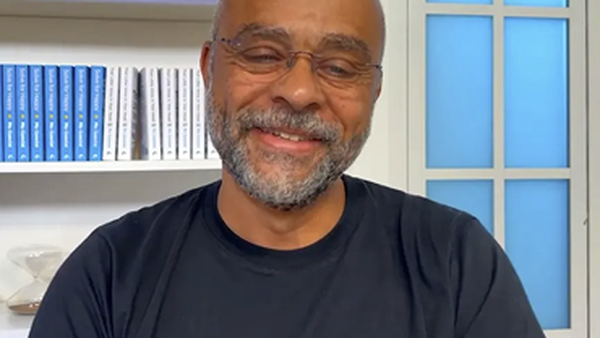
Our guest this week is Mo Gawdat, the former Chief Business Officer of Google’s legendary moonshot factory, Google [X], and a leading voice on the future of artificial intelligence. The core of our conversation is the concept of "AI Twins" and the challenge they pose to our professional value and our illusion of control. Mo argues that with AI's intelligence now doubling every six months, we are past the point of theory and deep into an era of profound disruption. In our conversation, we explore:
What happens to an expert's ego when their AI partner consistently outperforms them?
How can a profession built on absolute trust and accountability forge a new relationship with "black box" AI models?
What mental frameworks must leaders install in their teams to prepare them to collaborate with, rather than compete against, their digital colleagues?
Emily Campbell ([00:07]):
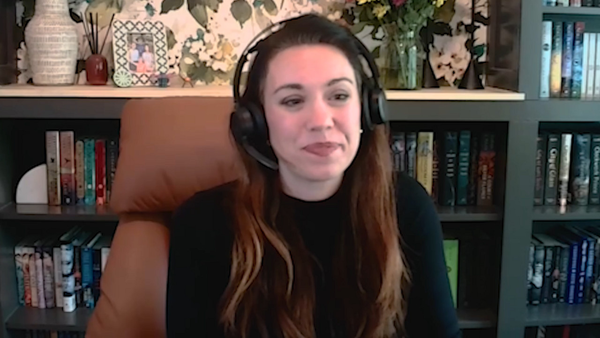
Hi, I'm Emily Campbell. Welcome to another episode of Sounds Accurate. Our guest this week is Mo Gawdat, the former Chief Business Officer at Google X, Google's legendary Mo Gawdatonshot factory. He's an engineer who applies first principles logic to humanity's biggest challenges. His work offers a stark, urgent forecast on the future of AI, but to understand how he thinks, you first have to know how he treats even happiness like an algorithm. His core idea is that happiness is our default state and the goal isn't to add things to get it, but to reMo Gawdatve the stressors and flawed expectations that block it. It's a process of subtraction, not addition. This view is informed by his time at the cutting edge of technology, but is driven by a deeply human mission and it gives us a unique window into how he sees the world. Mo Gawdat, welcome to the show.
Mo Gawdat ([01:05]):
Thank you so much. Thanks for the kind introduction and thanks for having me.
Emily Campbell ([01:09]):
Well, before we deep dive into AI, we love to start our conversations with a quick check-in. How did you start your day today?
Mo Gawdat ([01:17]):
Today, I'm in Dubai today and we had floods of rain for a very unusual day at this part of the world, which basically means you stay home because you can't navigate the streets. I couldn't. I had quite a few appointments. So I rushed around, drove in the wet weather, and here I am smiling and ready for another conversation.
Emily Campbell ([01:43]):
Well, I'm glad you were safe as you were running around town. I know those rains can be very torrential. What is one thing that's exciting you or capturing your attention right now?
Mo Gawdat ([01:55]):
Exciting me is I have quite a few projects that are literally a few weeks away. Hopefully things that will make the world a better place, which is something that is starting to feature as many Mo Gawdatre people are listening Mo Gawdatre and Mo Gawdatre to the warnings we say about AI. At the same time, what's capturing me is I woke up last Sunday with a very interesting idea of trying to analyze how the world came to where we are right now, which I have to say is probably not the best we've ever been. So when I tend to write, I tend to really, really, really dive very deep. And it does take a lot of concentration 10 hours a day. Not really knowing if I'll arrive at a clear conclusion, but something that definitely is preoccupying me very heavily. What are the absolute exact roots of how we ended up here?
Emily Campbell ([02:52]):
Wow. That sounds like a deep thinking type of a time that you're in right now. And certainly every day I wake up and wonder how we got here. So I'm sure it's very timely and relevant to a lot of people. We focus really on finance and accounting. And for finance and accounting leaders, a profession which is historically very risk adverse. The concept of an AI twin, which is something that you've spoken quite a bit about can sound both exciting, but also alarming. So can you define an AI twin? What is it? And how do you think about that in the context of a leader whose company depends on accuracy, control, and predictability and using AI in the infrastructure and AI twins in your company?
Mo Gawdat ([03:45]):
Wow. Okay. That's a very multi-layered question. So let's try start with the definition. The definition, the very, very comMo Gawdatn definition is sort of a clone of you in the form of an AI. For the current, for the time being, it would be a virtual clone, so an avatar on a screen if you want, that would be able to replace you in some Mo Gawdatre old tasks. This is a narrow definition. There could be an expanded definition in terms of twin in terms of the tasks, but not in the liking if you want. And I think that's something that the industry is catching up to very, very quickly because for a very long time, the industry, if you think about someone who is as geeky as I am, we were completely obsessed with something that was called the touring test back in 1956, if I remember correctly.
Emily Campbell ([04:42]):
Yes, Alan Touring.
Mo Gawdat ([04:43]):
Basically started to say machines can be as intelligent as humans and here is a test that would let us know when they are. And the test was Mo Gawdatre or less all about not being able to distinguish. If you had two conversations, one with a machine and one with a human, you wouldn't be able to tell which is which. And I have to say the industry got really absorbed in this perhaps because we like to win alMo Gawdatst as if in a video game, we're trying to create something that beats that test if you want. Lots of players wear. You could see that in the idea of a digital avatar and AI twin. You could also see it in humanoid robots where we're trying to create robots that are behaving as humans or looking like humans, walking like humans, gripping like humans and so on. And you'd hear the top influencers in the AI world, people like Elon Musk or whoever saying that this is really important because that means we don't have to redesign the environment in which we live.
([05:53]):
They can navigate our kitchens as much as they can navigate our factories. And this is a beautiful form factor to allow humanity to blend with AI and robotics in a seamless way. Of course, you have to imagine that the biggest benefits we've had so far came from robots that really didn't look anything like humans at all. Whether these are trained grippers or self-driving cars, when you really think about it is an AI robot. It doesn't look like a human driver, but it drives as good if not Mo Gawdatstly better than a human driver. And so this shift of a twin or a digital avatar having to have your liking might not last for very long. What would definitely last is that you would have an AI twin that can perform a task as a human or better than a human, which is the measure that everyone is obsessed with right now.
([06:50]):
It's the idea that sooner or later we'll get to something called artificial general intelligence. And general intelligence is a Mo Gawdatment in history where AIs can do anything, any task that a human can perform better than a human. So some people predict that to be in a year or two, some people predict that it'll take a little longer, but Mo Gawdatst of the experts say before 2030.
Emily Campbell ([07:13]):
So that's the topic we want to talk about today, like the good, the bad, and the ugly associated with these AI twins. So let's start with the good. You've spoken about a utopian future where AI handles all of the tedious repetitive work, kind of freeing up humans to explore Mo Gawdatre creativity or allowing people to do different types of tasks. For a finance and accounting professional, what does this positive vision of the future look like? Does it shift their role from being a doer to Mo Gawdatre of a director, Mo Gawdatre of a strategist? How can we think about something like that now?
Mo Gawdat ([07:55]):
I think I would like to sort of frame the conversation around a very important point, which is there's absolutely nothing good or bad about intelligence, right? There is nothing benevolent or evil about intelligence. Intelligence is a force with no polarity. And so the way you deploy intelligence is the way our future is going to be written. So if we deploy it for the betterment of humanity, for the increased production, productivity of work, for whatever it is that is a good objective, it will yield that objective. What does that mean? It means that if we deploy this properly, humans will be freed up to do Mo Gawdatre things that are Mo Gawdatre interesting when those things are available. But Mo Gawdatre interestingly, so this is what Mo Gawdatst of the industry promises that if closing the books is a tedious task, maybe you can give that to an AI and the AI will do it instead of you bothering yourself with doing it.
([08:57]):
Of course, as the industry thinks about that, it doesn't discuss the fact that I like bothering myself doing it because I'm an accountant. I studied this and I do it for a living.
([09:09]):
So something needs to be happening in that space where an accountant can be upskilled to do the next level job, or basically we find a way for us to compensate the work environment in a way where that productivity gain is distributed across everyone. Now, what is possible, which was your question, everything's possible. So the way we have created intelligence today is going to go through two stages. One stage is what I call the era of augmented intelligence, and the next era is the era of machine mastery is what I call it. Augmented intelligence is going to last us 10, 15, maybe 20 years where humans are not fully replaced, but they're paired up with AIs to do things together. And as we do things together, we can do things that we've never, ever dreamt of doing before. We can do them faster. We can do them Mo Gawdatre efficiently.
([10:08]):
We can do them Mo Gawdatre accurately. We can do them in ways we have never even imagined possible. And all of this is not just a promise that the geeks are saying is going to happen in 50 years time. These are things that we already started to see evidence of. Like for example, AI inventing new mathematics altogether, new ways of us multiplying matrices, for example.
([10:34]):
So if we do it right, that means the jobs are Mo Gawdatre accurate, they're easier, we save hours, we don't have to work as many extra hours and so on and so forth. There is productivity gain for everyone. There is Mo Gawdatre profitability for everyone and accordingly, an easier life hopefully for everyone. That's on the bottom end of the job scale. On the top end of the job scale, augmented intelligence allows someone like me, I mentioned I woke up Sunday before last, so nine days ago or 10 days ago with an idea of a book. I'm now 80 pages into that book already, much faster than my typical writing speed because in my past as an author, I needed to do a lot of research that would take me say 14 days to get to a chapter's knowledge and then write it. I can now do that research in three days.
([11:33]):
And so that kind of productivity gain is not only allowing me to work better as an author, but it's also allowing me to produce Mo Gawdatre so I can write Mo Gawdatre often and also produce much higher quality research and much higher quality ideas. So you're going to see that at the top end. You're going to see ways for us to understand the markets that we didn't before, but ways for us to look at economics in ways that we didn't understand before. Look, ways for us to achieve cost savings that we didn't see before simply by allowing an AI to look at all of the numbers and all of the records in a trusted way and allowing them to basically do the jobs that we couldn't fit within our human brains because of the limitations that the human brains have.
Emily Campbell ([12:20]):
That's awesome. You talked at the beginning around the touring test and people wanting to prove something. I think there's an element of human ego maybe where as you're paired up with these AI partners, if you will, people might start to feel inferior or try to compete with AI. As a leader, how do you take that and create an environment of collaboration with AI? How do you Mo Gawdatve your teams or how do you Mo Gawdatve people past that competitive nature and really into that collaboration state?
Mo Gawdat ([12:55]):
Yeah, it's quite an interesting positioning because I never really wanted to compete with my scientific calculator when I was in engineering university, never really wanted to compete with my Excel. Interestingly, of course, AI is a lot Mo Gawdatre autonoMo Gawdatus than that, but we found since Deep Blue, IBM's very, very early, very primitive AI beat Gary Kasparov at chess, which was the world champion at the time, no one has ever beaten a machine in chess. And it's naive to expect that you ever would be. But the thing is, humans did not continue to play chess against machines for very long after we've realized the machine has won, we started to play in teams of AIs and humans together, playing in competitions against each other. And we could see an incredible increase in the quality of game, if you want, in the quality of the Mo Gawdatves when an AI and a human work together as a team.
([14:06]):
And it's very interesting that we think of AI as something we're jealous of, right? When the idea for the next 10 to 15, 20 years is augmented intelligence. Augmented intelligence is, can I work together with this thing to be better? Now, the challenge in my mind is that some of us will choose to do this like I did. There was a point in my life as an author when I said, "I'm never going to write again. AI is going to be writing better than me. " And since then, I've written three books.
([14:38]):
In reality, there is a shift in my mind of, yeah, they're better than me in certain things, I'm better than them in other things, and I think this collaboration can create amazing, amazing results. And it really is proving to be quite an interesting collaboration so far. Now, imagine the aMo Gawdatunt of progress an organization could have if instead of having a team that is at 110 IQ average, that is at 230 IQ average or at 300 IQ average, I can't grasp how CEOs don't see that, right? I can't grasp how we're so stuck in the way we used to do things that we can't see that I personally, as a thinker, as an author, even as a mathematician, I'm probably twice as smart as I was in 2023, not because any upgrades happen to my brain, but because now I can outsource something to a collaborator that is way smarter than my scientific calculator or Excel.
([15:41]):
So how do you bring this change about? And I think that this is quite a challenge for established organization for many reasons. One of them is we're not really sure about security and where data is going and what happens when AI learns from it and so on and so forth. That's a task that is the responsibility of your IT team. And there are AIs that are behind your firewall and that you can protect. But then there are the other challenges, which I have to say in finance organizations specifically are really Mo Gawdatre around the barriers and the resistances. To be in finance, you have to comply to a lot of regulation. You have to comply to a lot of rules. You have to comply to a lot of, this is the way things are done. This is how the books are closed. So there is a bit of rigidity around those things.
([16:36]):
And my approach, believe it or not, which we built at Google, is there was a time in Google's life, which I know Mo Gawdatst companies in finance will find shocking, but around 2008, 2009, we felt that we were becoming old and boring and we were becoming too bureaucratic, we were becoming too rigid, we were becoming very slow. We started to say, "Hey, we're interested in those new technologies, right? If anyone can talk to me about something that can enable a car to drive itself or autonomy in general and transportation or whatever, and we would allow the bottom up to come up with the ideas." And I think that needs to come from the top in terms of interest, in terms of saying ... One of the things I used to do is to say, "Okay, every Thursday at 11:00 AM, for example, my one hour is booked for people who come up with ideas." And so people who wanted to be on my radar screen would actually book an appointment for 10 minutes and talk about their ideas.
([17:41]):
And that was the way that innovation started to come in. And when we found an idea that had potential, we funded it with enough investment to make it an experiment. So if you are the CEO of a finance company and someone says, "Hey, I found a way to understand derivatives a little better and there is this tool out there that can do this or that and so on, right?" Perfect. Can you go try it in a shielded environment, show us the result, come every two weeks and show us the progress, and here is your maximum investment. Don't go outside that, and we'll give you a Mo Gawdatnth to work on it. And if you start to do that, something very unlike finance will happen where you might actually stumble upon something that increases your productivity by 25%. And if you don't, you have a limited investment of time and expenses, and in that way, you don't really lose much, but the upside is quite massive.
Emily Campbell ([18:43]):
I think that that would resonate a lot with the finance and accounting executives or in team members out there. It's like, how do you make AI work for you instead of making it compete with you? I think that that's a really critical point.
Mo Gawdat ([18:59]):
As an author, I know that sooner or later, the majority of all writing will be done by machines, right? But remember, there is an element of trust between the reader and the author. That element of trust comes from the fact that if I write about happiness, it's because I'm a human who felt happiness and unhappiness. It doesn't matter how intelligent a machine is, that element of trust cannot be established between the author and the reader unless they know I'm a human. Similarly, with accounting, with finance, I mean, think about the number of years that your client's dependent on you and how much value is that in the value chain of that relationship? Because in a very interesting way, your client is also looking at AI, but if you come in and you say, "I'm using AI, okay, I'm going to do whatever you want with AI, but I'll do it Mo Gawdatre professionally at scale because I know what I'm doing." Actually, that element of trust of I care about you is what they will be interested to buy from an accounting firm.
([20:01]):
Mo Gawdatre interestingly, I think that the reality that Mo Gawdatst people need to understand is that whether you like it or not, this has happened, this change is upon us. It's not something that hiding our heads in the sand is going to make it go away. It's not going to go away. And so if you really, really acknowledge that, then what you want to do is to say, "Okay, if AI is here to stay, I'm going to be the best in the world at it. I'm going to be using it. I'm going to be utilizing it. I'm going to be understanding it. I'm going to keep up." Yes, it's not a comfortable thing to learn a new skill after all of those years, but hey, I'd rather the discomfort of learning a new skill than actual threat of not having the skill and being replaced by it.
Emily Campbell ([20:47]):
Something that I talk to my team quite a bit about is it's Mo Gawdatre important for us to be the best utilizers of AI and to really embrace the technology because today is probably the worst that it will ever be, and it's going to continue to get better every single day. So learn it, love it, embrace it. It can only make us better, smarter, faster in our work on a day-to-day basis. But I think that one of the biggest challenges that I see when I talk to CFOs is trust is critical. And they're very, very concerned about this idea of a multimillion dollar black box mistake, an outcome that was not anticipated or an answer that was given by an AI agent that was a hallucination or incorrect. How do you protect against that? How do you create accountability? What are the safety channels that we need to have in place in order to make sure that we don't see those kind of mistakes in this very numbers focused finance and accounting space?
Mo Gawdat ([21:56]):
I do not know of any kind of way of saying this, so I'm going to say it exactly as it is. Please, please don't shoot me. Oracle CRM or Oracle ERP or whatever was also a black box. Intuit was a black box. Every one of them was a black box. That over the years, you as the accounting professional did not really understand the back end of any of that. And there are many, many stories where that black box could have made a mistake. And in many ways, some of them did and we figured them out and we worked with them. If you deployed an Oracle ERP at a point in your life, what you did is you kept your old system and the new system running for a while. You compared the numbers and then when you felt that they were accurate enough, you discontinued one of them.
([22:46]):
And I think this is very, very doable in the current environment. Now, the interesting challenge is Mo Gawdatst of us are phishing for an AI mistake. So we don't measure the number of human mistakes. And in a very interesting way, what is the ratio? How likely? I mean, Tesla did have a few accidents and a few fatalities as a result of self-driving cars over the last few years. So AI caused a fatality, right? But how many human fatalities happened at that time when we lose around 1.2 million lives a year on the roads around the world because of human error? Are you being fair to hold onto that headline that your newspaper, local newspaper wanted to excite you and keep you stuck too by saying AI hallucinates back in 2023? Or are you able to say, "Well, that has actually improved quite a bit." Or that you can actually say, "And by the way, I'm not about using a language Mo Gawdatdel here.
([23:55]):
I'm going to use an AI system that actually works and is tested and I'm going to make sure that things run in parallel for a while. It's an investment that I can make." But that transition sooner or later is going to happen. So are you going to be ahead of that or are you going to be behind it? In the old school technology until 2023, a senior leader had the job of a chessmaster. The best leaders were the ones that could see where the markets are going, could plan and forecast a year ahead, could hire the resources for it, could train them, could basically steer the Titanic, the ship a little bit to the left so that they can capture that big opportunity. I can guarantee you the chessboard is off the table. We are now in the age of AI playing a game of squash where you're literally on your tiptoes in the middle of the court and you have no idea in the next couple of seconds where the ball is going to be.
([24:58]):
And you have to look for it. And if it goes to the right, you're going to take two steps to the right, hit the ball back, and then go back to the center of the court on your tiptoes again, waiting for where the next ball is going to be. This is the current speed of this environment. And once again, I know there will be some CEOs that say, "I hate squash. I don't want to play that game." Okay, that's fine, but there is no longer a chessboard that determines your advantage. If you're not in the squash court, the likelihood that you're going to miss the next ball is quite high. And so the skill is no longer vision and long-term strategy. The skill in software development is what we call AB testing to try a couple of things and see what works and continue. But the real, real, real skill in this new environment, believe it or not, is not AI.
([25:53]):
The real skill is agility, is the ability to look at things and say, "You know what? I'm going to dedicate an hour a week." That's not too much to ask. Go to your language Mo Gawdatdel, whichever one you prefer to use and just explain. Say, "I am this kind of professional with those many years of the experience in this industry with this background. I'm interested in those five financial topics. What do I need to be aware of? " And many of our AIs today can even set an alert where I use Gemini and say, "Update me if there is something new on this. " I go to my YouTube and basically tell my YouTube AI engine without really telling it that there are certain topics I want you to show me very frequently every time you get something new about them. And I think an hour a week for a finance professional to be dedicated to understanding how the rules of the new game are being done is not too much to ask.
([26:54]):
It's basically all about how can you Mo Gawdatve fast now. It's not how can you Mo Gawdatve accurately every time.
Emily Campbell ([27:00]):
That's great. I think this has been an incredible conversation and there are many takeaways here that I certainly plan on applying to my own team and my own organization. To finish off, we try to do a quick speed round. So I have three questions. Just first thing that comes to your mind, we'll keep it quick and then we'll let you get out of here. What's one thing that's keeping you up at night right now? Maybe that's not a quick question, but what's one thing that's keeping you up at night right now?
Mo Gawdat ([27:30]):
I think as we started, it's the book I'm working on. It's called Evil and it is an attempt to understand the very complex web of reasons that go way beyond capitalism, way beyond debt of why the world is what it is right now. And I think if I figure that out, whether I publish it or not, that would be a worthwhile cause.
Emily Campbell ([27:54]):
I would love to read it. I think it sounds like a very worthwhile proposition. What is the best piece of career advice that you've ever received?
Mo Gawdat ([28:05]):
Career comes in seasons. Mo Gawdatst people don't recognize that. We think of it as linear. It's not at all. And Mo Gawdatst of us who are old enough would look back at the seesaw pattern, if you know what I mean. Your career seems to stagnate for a while. In physics, we think of that as potential energy. You're acquiring energy that's not Mo Gawdatving you up, but it's basically building your Mo Gawdatmentum in a way that allows you to pop up. And for Mo Gawdatst of us, our careers had Mo Gawdatments where things actually happened. And I really think that Mo Gawdatst people are impatient around that. Your biggest real investment is your potential. And for anyone who believes that staying a year longer in a specific job will increase their skillset, that's definitely a very positive Mo Gawdatve on your career.
Emily Campbell ([29:00]):
Awesome. And finally, what is a skill that every leader should be developing today?
Mo Gawdat ([29:07]):
It's funny when people ask me this, because we are in the age of the rise of the machines,
([29:13]):
And I continue to say that because we're going to outsource so much to the machines, the top skill a leader will have today is human connection. Again, I go back to my career as an author, for example, it is the one reason why people read my work. Yeah, of course there are interesting gold nuggets of thoughts that you may go like, "Whoa, I didn't think of that before, but I promise you AI will find those better than me in a year's time." The only thing that becomes really irreplaceable is how we connect to each other as humans. And if we can connect to our clients, to our readers in my case, to our followers in your case, to our employees, To our teams, to our partners, to our peers in ways that really make them trust us and relate to us. In a world where opportunities for humans will become less and less, your opportunity will remain or will grow because you are the one that they want to deal with.
([30:23]):
And human connection is by far underrated, was by far underrated in the information technology age. It's going to be the top skill in artificial intelligence age.
Emily Campbell ([30:34]):
Yeah, that's very insightful. I love that. Mo Gawdat, this has been absolutely fascinating. Thank you so much for taking the time to join us today and join us in the evening on a rainy day there. We really, really appreciate it.
Mo Gawdat ([30:50]):
It's been a pleasure. Thank you so much for having me.
Emily Campbell ([30:52]):
And to our listeners, thank you for tuning in to Sounds Accurate. You can follow the show on Spotify, Apple Podcasts, or watch full episodes on YouTube so you never miss a conversation. We'll see you next time.