SOUNDS ACCURATE: A BLACKLINE PODCAST
Sounds Accurate: Episode 9 - Confessions of a CFO Turned Chief Product Officer
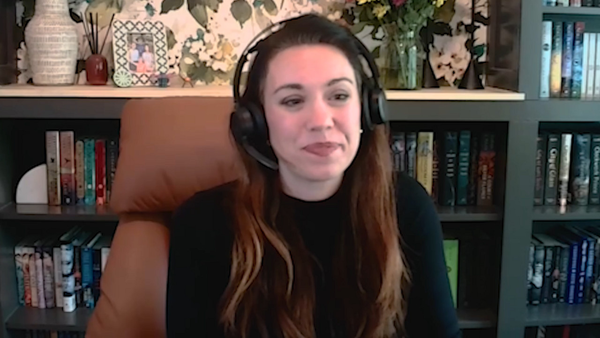
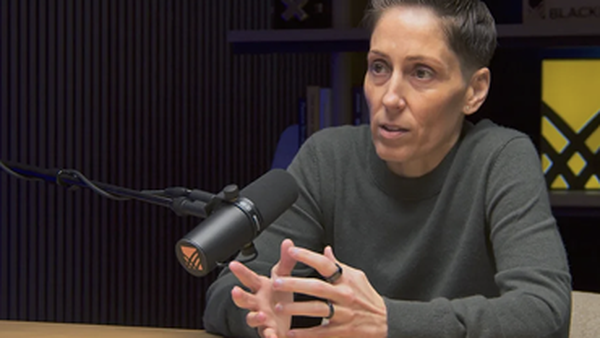
It takes a specific kind of leader to transition from running a finance department to reinventing the technology that powers it. In Episode 9 of Sounds Accurate, host Emily Campbell sits down with Monica Boydston, Chief Product Officer at Kyriba, fresh off the main stage at Kyriba Live.
Monica shares her rare and powerful perspective on the tech world, detailing her non-linear journey to the C-suite and her passion for building solutions that fundamentally change how finance operates. Tune in as we dive deep into the realities of female leadership in male-dominated industries, the importance of storytelling with data, and how agentic AI is unlocking a whole new, predictive future for treasury teams.
Key Takeaways
The Non-Linear Career Path: Why rejecting the "conventional playbook" and ignoring traditional linear progression was the best career move Monica ever made.
Redefining Leadership: Discover why true leadership isn't about having all the answers, but about building high-performing, diverse teams that aren't afraid to challenge you.
Agentic AI in Treasury: Get an inside look at Kyriba's massive new integration with JP Morgan’s Morgan Money. Learn how this agentic AI orchestration allows treasurers to connect the dots in real-time and actively anticipate cash needs.
Bridging the AI Trust Gap: Why finance professionals naturally hesitate to trust "black box" technology, and how to build confidence in AI by starting small, employing human-in-the-loop safeguards, and recognizing AI as an enabler rather than a replacement.
The Skill Every Leader Needs: Why data translation and storytelling are the most critical skills for turning accurate spreadsheets into clear, strategic narratives that drive business growth.
About Our Guest
Monica Boydston is the Chief Product Officer at Kyriba. As a former CFO, Monica brings a practitioner's mindset to software development, building treasury systems for treasurers, by treasurers. She is a passionate advocate for empowering human beings through technology and a trailblazer for women in executive leadership.
Don't miss a conversation! Make sure to follow Sounds Accurate on Spotify, Apple Podcasts, and subscribe to our YouTube channel so you never miss an episode.
Emily Campbell:
It takes a specific kind of leader to transition from running a finance department to reinventing the technology that powers it. Monica Boyston has done exactly that. As a former CFO turned chief product officer at Kyriba, she brings a rare and powerful perspective to the tech world. She builds solutions that fundamentally change how finance operates. Fresh off the main stage at Kyriba Live, Monica is here to share her journey to the C-suite. We will discuss female leadership in finance and how AI is unlocking a whole new future for treasury teams. Monica, welcome to Sounds Accurate.
Monica Boydston:
Thanks for having me, Emily. I am honored to be here.
Emily Campbell:
Excellent. Well, before we dive in, we have a couple of questions that we always like to get started with. So tell me, how did you start your day today?
Monica Boydston:
I'm pretty routined with my morning. So as always, I start my day with a massive cup of black coffee. I would say the stronger, the better. And I like to start my days quite early. So I woke up at 5:30, immediately coffee. That's the first thing I do. And then I spend 30 minutes catching up on what's happening in the tech space, kind of reviewing my calendar, preparing myself for the chaos of the day, which I love. And then I hit the shower, listen to a true crime podcast. So I'm a true crime junkie. So I listen to a podcast while I get ready, and I was sitting at my desk by 7:30 this morning.
Emily Campbell:
It takes a specific kind of leader to transition from running a finance department to reinventing the technology that powers it. Monica Boyston has done exactly that. As a former CFO turned chief product officer at Kyriba, she brings a rare and powerful perspective to the tech world. She builds solutions that fundamentally change how finance operates. Fresh off the main stage at Kyriba Live, Monica is here to share her journey to the C-suite. We will discuss female leadership in finance and how AI is unlocking a whole new future for treasury teams. Monica, welcome to Sounds Accurate.
Monica Boydston:
Thanks for having me, Emily. I am honored to be here.
Emily Campbell:
Excellent. Well, before we dive in, we have a couple of questions that we always like to get started
with. So tell me, how did you start your day today?
Monica Boydston:
I’m pretty routined with my morning. So as always, I start my day with a massive cup of black coffee. I would say the stronger, the better. And I like to start my days quite early. So I woke up at 5:30, immediately coffee. That’s the first thing I do. And then I spend 30 minutes catching up on what’s happening in the tech space, kind of reviewing my calendar, preparing myself for the chaos of the day, which I love. And then I hit the shower, listen to a true crime podcast. So I’m a true crime junkie. So I listen to a podcast while I get ready, and I was sitting at my desk by 7:30 this morning.
Emily Campbell:
Excellent. Well, Monica, I think you and I should be friends because I also get up early in the morning and have to start with a giant cup of coffee in order to get motivated and moving. So I feel your morning routine. That’s amazing.
Monica Boydston:
Indeed. I think a fun fact that always surprises people is we have a coffee maker right on our bedside table.
Emily Campbell:
Oh, wow. So you don’t even have to move
Monica Boydston:
That far
Emily Campbell:
Before
Monica Boydston:
You can start. Exactly. As soon as I wake up, I hit the button, the coffee’s made, and my feet don’t even touch the ground.
Emily Campbell:
Awesome. I think that’s a good way to embrace the morning in a very positive way. And I love the early rise strategy. It certainly helps get you ahead of the day before all of the chaos begins. So tell me, what is one exciting thing that’s capturing your attention right now?
Monica Boydston:
I think it has to be the sheer pace of this AI revolution that we are experiencing. And I would say both in general and in finance. For a long time, tech and finance was about backward-looking automation, just kind of fixing what already happened. But now we’re looking at predictive real-time data. We’re having conversations with data and that completely changes how a treasurer of finance anticipates risk. And I think it’s a revolution that’s not just a marginal upgrade for technology and for people. It’s a complete rewrite of the playbook. And I think being at the center of building that at Cariba is incredibly energizing.
Emily Campbell:
That’s awesome. I think AI is really changing how we all do our jobs on a day-to-day basis and moving from that more reactive reporting mode into a more predictive, proactive stance I think is a big change, a big shift for everyone in the finance and accounting organizations. But it sounds like particularly for treasury, you’re starting to see some of those changes happening now.
Monica Boydston:
Absolutely. And just how AI is unlocking the ability to actually converse with the data and get to answers faster and more easily. It’s just an unlock. It’s a game changer.
Emily Campbell:
That’s amazing. Well, hey, let’s get started. I wanted to just start our conversation with a quick discussion about your career path because you’ve had a really unusual path going from being in a CFO seat to ultimately becoming a chief product officer. You’ve essentially crossed the line from buying software for the finance and accounting departments to actually building software. Tell me a little bit about your path and how you moved from that traditional finance role to your chief product officer position.
Monica Boydston:
Yeah, definitely not a linear career path. I’ve done things not the traditional way. I would say there was definitely a specific defining moment for me. And it kind of started with my deep curiosity about the why behind the business rather than just tracking the what. I love the discipline of finance. I’m definitely a numbers person, but I kept finding myself drawn to that operational connective tie that actually drove those numbers in the first place. I’ve also always been a little bit tech-savvy. My grandfather built computers when I was a kid, and so I’ve had a computer in my hand my entire life, and that’s probably relatively unusual. I’m aging myself for my age. But early in my career, I kept running into roadblocks with the software that I was using. I just couldn’t get the information that I knew I needed in order to unlock certain growth opportunities within the business. And so the business owner and I partnered, and we actually built software from the ground up, and we built it in a way that could give me what I needed. And we also built an integration back into the primary ERP system that we were using to run our business. And that’s when the unlock took place. It was a game changer for us. And essentially from there, a software company was born.
And after that, I started sharing the success of the software and implementing it in other organizations like mine. And so I’m running the operations, I’m running finance, but I’m building this software company all in parallel. And as I was testing this and implementing it in other organizations like mine, I could literally see their P&Ls improve. And it was at that time that I realized I really like finance, but I absolutely love building solutions that help businesses grow and prosper. And that was my defining moment. That was the shift. That’s when I realized I wanted to transition from just traditional finance to unlocking the opportunity to drive growth within other businesses through technology.
Emily Campbell:
That’s amazing. It’s a great story. I think the way that you describe it, very similar to BlackLine. We started out as a problem that was surfaced by some folks that Therese Tucker, our founder, knew, and she built a software solution to solve their problem and then kept going and building more and more solutions to solve that problem in the office of the CFO. And having your background in finance and accounting I think is really, really critical. We have a lot of former accountants, former finance professionals here at BlackLine. And I think being able to bring that practitioner mode into software development really helps ensure that you are solving real problems for your customers on a day-to-day basis.
Monica Boydston:
That’s absolutely right. I mean, when you can build treasury systems for treasury systems by treasurers, you’re able to connect the dots more easily and understand what are the outcomes that the users are trying to achieve and how do you build software that gets them to those outcomes? So being able to put the customer hat on I think is a huge opportunity and a huge differentiator in product.
Emily Campbell:
Amazing. Well, I know from your career perspective specifically at being a CFO and a chief product officer, you’ve really spanned two areas of the enterprise that are historically very male dominated. So I wanted to just talk for a few minutes about your experience as being a woman in leadership and how that’s potentially shifted your career, how you though about your career, and really how you feel like you’ve had to earn your seat at the table in a, again, more traditionally male dominated space.
Monica Boydston:
Yeah, it’s a really great question and it boils down to two things I think. Number one, exuding confidence even in the face of the unknown. And then number two, really focusing on impact through storytelling. So from a confidence perspective for women, I have this saying, some might not like to hear it, but I say the only glass ceiling you encounter is the one you place over yourself. And I really truly believe that while I’ve always been in male-dominated industries, even before I was a CFO and before I was in product, I was actually in hardware and lumber. And so always male-dominated industries, and it’s just never been something to weigh me down. I’ve never paid attention to who else is in the room and how their attendance might influence my ability to create impact. I think too, as a leader and as a woman, but as a leader in general, it’s critical to get comfortable with being uncomfortable, particularly in public.
You’re never going to feel 100% ready for those big leaps. And I think the secret is realizing that men entering the same room at the same time, they’re often not completely ready either. But the differentiator is the confidence, the confidence to take up space, to speak up, to make yourself seen and known. And so I would say as a leader, male or female, you have to raise your hand for the hard and the highly visible projects that nobody else wants because that shows that you’re up for the challenge. And then I think too, when we talk about focusing on impact and storytelling, to truly drive organizational culture, you have to break out of your functional silo and learn about how each
function connects to the greater growth of the business. I think professionals who plateau are usually the ones who just kind of deliver the numbers.
The ones who really earn a seat at the table are the ones that can actually translate that data into a story, a story that a CEO or a board can actually act on. So when you become the bridge between deep financial discipline and forward-looking growth, you naturally become an indispensable leader no matter what the demographics of the room look like.
Emily Campbell:
That’s great. I think in my experience in marketing, storytelling is very critical. And being able to connect those dots for people across multiple points in the industry and even within your own ecosystem and understanding what the sales needs are, what the customer needs are, what even your finance and accounting team internally is as you are building products, be able to connect those dots and really solve a customer need while also understanding your internal infrastructure has got to be one of the biggest challenges. So it sounds like making sure that you’re curious and interested in the entire ecosystem is a big part of how you think about success.
Monica Boydston:
Absolutely. Absolutely agree.
Emily Campbell:
I think not limiting yourself because you’re a female too. A lot of men, as you say, they show up with a confidence in the room, even if it’s not necessarily 100%, I wouldn’t say 100% earned. I believe it is, but even if they don’t know all of the facts in the room, they tend to show up in a very positive way in general.
Monica Boydston:
And I
Emily Campbell:
Think that that’s a lesson that certainly some women need to continue to learn as they move through their careers. So for the women who are listening that are actively trying to move into executive leadership, what are some important lessons that you feel like you’ve learned? And actually it could be men or women, but I think it’s really important to think about those lessons learned and how you’ve made that leap from running a finance organization to running a product organization and even moving from an individual contributor to a manager and ultimately a leader in your company.
Monica Boydston:
I am only here because of the people who have been around me, who have supported me and helped guide me. And that’s from a mentor perspective, but also from a team building perspective. I think the biggest shift for me happened when I realized that leadership in my success isn’t about having all of the answers and trying to be the smartest person in the room. When you try to project absolute perfection, particularly when it’s about building high-performing teams, because if your team isn’t high-performing, you’re not going to be high-performing. When you try to project that perfection, you actually build a wall with your team, you don’t build trust. And so I think the true unlock is creating those high performance teams and that trust. And it comes from creating conditions for the right answers to emerge, not from you, but from your team. I learned to focus on building rooms of just incredibly talented, smart people who would actively challenge me.
And I think good leadership requires the confidence to be okay with that, to be okay with the fact that your team is smarter than you in their respective zones. And when you build that team and your team actually sees that you genuinely value their expertise and that you give them the space to take risks and that you’ll be there to back them up when things get difficult, that’s when things really start accelerating. So I would say for the women out there aspiring to the C-suite, but not just women, anybody in general, just remember that you don’t need to be infallible to be a great leader. You just need to be authentic, deliberate, lift people up around you and be confident enough to know that you don’t have to be the smartest person in the room.
Emily Campbell:
I think that’s a great insight. I have worked for people in the past on both sides of that fence where they always felt like they had to be the strongest people or the smartest people in the room. But I do agree that the leaders who recognize the strengths of their teams, they tend to be able to accelerate faster. They’re listening to their team. They’re not looking for yes men. They’re looking for people that are really going to give the right opinion and challenge their leader when it makes sense to do that. I think you get a lot more out of that capability and I think companies are better for it.
Monica Boydston:
Completely agree. I think multiple perspectives, healthy tension, hard conversations, that’s where you really unlock ideas and innovation and opportunities.
Emily Campbell:
And not just with your team, also with your peer group at an executive level. You may not know everything that there is to know about another department, but having that intellectual curiosity to build a better understanding and challenge the status quo even in other areas can be extremely impactful in your company.
Monica Boydston:
That’s right.
Emily Campbell:
I want to shift to the massive wave of innovation coming from Kyriba. You’ve just unveiled a major integration with JP Morgan’s Morgan Money platform that’s powered by agentic AI orchestration. So how does a partnership with a company like JP Morgan at scale actually change the way a treasurer manages liquidity?
Monica Boydston:
It’s a great question and incredibly excited about this partnership with JP and Morgan Money. And I think it’s a massive game changer because it fundamentally shifts treasury from being reactive to being truly predictive. I think historically liquidity management meant logging into multiple systems, pulling data from everywhere, spending hours trying to piece together a clear story of your global cash position. And what we’re doing with JP Morgan and this whole agentic AI orchestration is we’re connecting the dots in real time. And it means that the system isn’t just waiting for you to ask a question or look at a spreadsheet. Ty, which is our agentic AI, can actively anticipate cash needs. It can optimize yields, it can orchestrate complex workflows across multiple platforms. So you log into one UI, but you can activate workflows across both systems. And it really takes the heavy lifting out of the how of technology and it allows treasurers to focus on the why of the business. I think it’s impactful. I think it’s a first step. It’s just the beginning, but very, very excited to partner with them on this.
Emily Campbell:
So I think that’s one of the promises of AI is that you’ll be able to, instead of moving information from one system to another or into Excel, you’re actually able to go out into multiple systems, bring the information to you and have it highlight where there might be issues, problems, concerns. It feels like almost a dream come true I think for a lot of customers in these jobs on a day-to-day basis. Are you getting a lot of positive reaction from your customer base on this?
Monica Boydston:
We are. We’ve got a lot of positive reaction from our customers, but also from the market. And to your point, Emily, and I’ve said this before, we’ve been talking for gosh, five years or more now around the office of the CFO and the desire to do vendor consolidation because working in multiple independent applications and having to pull data from all of these systems is incredibly complex. But what this type of technology opens up for all of us is no longer the need to do that. Because if you can have this orchestration layer acros all of the applications within your portfolio and have a conversation with that data, you’re not even interacting with the individual systems as much as you used to. And I think it opens up opportunity to dispel the need to consolidate your vendors, but build an orchestration layer rather, and connect all of the systems together.
Emily Campbell:
Yeah. And I think everybody’s looking to try to figure that piece of it out. So I think that that is one of the, again, biggest opportunities that we have with AI. I think though that a lot of finance leaders have expressed to me there’s a hesitation with trusting AI and really thinking about something as critical as global cashflow and global workflows. How do you help bridge that trust gap when you’re thinking about your tools?
Monica Boydston:
So trust is a huge thing for us. Ty, our AI is trusted AI. I can completely understand the hesitation. I mean, if you come to me and tell me that some black box is going to move my cash, ding, ding, ding, there are alarm bells going off in my head immediately. And we know finance and treasury leaders, they’re paid to be risk averse. They’re paid to protect the money. So you can’t just tell them, "Oh, just trust the technology and think that they’re going to accept it. It’s just not going to work. So I would say the way that we bridge that trust gap is by emphasizing that AI is an enabler. It’s not a replacement for human judgment. So we build safeguards, we build transparency, we build explainability into the tools, and we build control. So it isn’t as if AI is acting on your behalf without you having the opportunity to make a final decision.
And interesting, you don’t have to become a deep technologist overnight, but you do have to build the muscle to interact with AI and find ways where it makes sense that that technology can do the work, but also where a human needs to continue to do the work. And to really create that in the technology that we are building around AI and orchestration, we also allow finance leaders to start small if they want, dip their toes in the water to build that trust. And once they start to build that, we’ll encourage them to use AI first to eliminate something that’s low risk, some repetitive task, and use that to start to build the trust slowly. And once they see that they can trust what the technology is doing and the accuracy that’s coming out of it and the strategic clarity that it’s providing, that hesitation starts to fade. The trust builds, they’ll lean in more, they’ll try something else. So it was really important to us that we built the solution in a way that was flexible enough to allow the users to start as small as they want or go all in if they want at the same time. And then just ensure that we’ve got the safeguards and the guardrails in place to make sure that their cash is protected at the same time.
Emily Campbell:
I think the idea that you are building in those safeguards, that’s incredibly important. We see that with any customers in the finance and accounting space. They really want to make sure that we’re not putting any of their information at risk or putting any of their, certainly their cash, but even their financial information and how that workflow works. I love the idea of being able to start small and grow as you gain trust. And I think you also mentioned human in the loop or having that checker there. You don’t want to give all of your information to your AI and just hope for the best. You really need to be thinking about how do we continue to engage, build that trust? But even over time, you don’t want to just let it run completely automated, but continue to have checkers in the loop that are very understanding of what you’re trying to accomplish and can really be ensuring that your products and solutions are serving the customer in the way that they’re intended to. So I think that makes a ton of sense.
Monica Boydston:
Yeah, absolutely. And I think again, you’re always going to want a human in the loop. And I think AI is going to be really interesting in that it is going to be really beneficial for those automated everyday tasks that are bogging people down. But once you can build the trust with the users that, oh my gosh, I can get rid of this thing that I spend 25 minutes every morning doing so that I can focus on actually trying to understand the story that the data is telling. But it takes time to be able to trust that that’s going to take place and it’s not going to come back and harm you or your business after the fact.
Emily Campbell:
And I think shifting your workers, it’s like how do you move them from that automated or that task-based activity that they do for 25 minutes every morning to the examination and understanding the storytelling? I think there’s absolutely a training element associated here, but also just making sure that your team members are able to make the leap from the tactical to the strategic. And that becomes a problem that all companies are trying to solve in all areas where they’re looking at automating through AI. It’s how do you take your employees and leverage the time that they’re saving from some of these automation activities into something that is more strategic and makes sense for the business?
Monica Boydston:
I hear this a lot. I’ve got kids that are in their early 20s and coming out of college and there’s a little bit of a fear of, oh my gosh, what am I going to do if AI takes my job? And the way I explain it is it actually brings you, it creates opportunity to move into leadership roles without being a leader faster. Because you’ve got this team of agents that are doing all of that repetitive work, but you are essentially having an opportunity to manage that team and then make strategic decisions based on the work that that team is doing. And so I like to challenge people to think about the opportunity that it creates in evolving roles as they exist today to becoming more critical, more critically thinking and strategic. I think it’s really an exciting time for every role around the world.
Emily Campbell:
Yeah. I’ve said things like AI is not going to come and take your job, but somebody who knows how to use AI may come and take your job. Because I think that ability to leverage AI in your workflow and really expand your throughput and your ability to up level to that more strategic level, leveraging the tools in your toolkit, it’s almost like a chef who doesn’t have a really sharp knife is not as effective as a chef who does. And I think all of our team members, regardless of the department that they’re in, they need to be looking at these tools as a basic essential for accelerating their ability to be strategic, really giving them the tools that they need to do what their job is becoming as opposed to what their job has been maybe in historical versions of that position.
Monica Boydston:
Couldn’t agree more. And I love that. I love that position that you have and I love the cooking analogy as well. If you don’t mind, I might borrow that. That’s great.
Emily Campbell:
Okay. So looking ahead, what is the single most exciting capability that AI will unlock for the treasury profession over say the next three years in your perspective?
Monica Boydston:
If I had to narrow it down, I would say it’s the transition from data aggregation to automated strategic execution like we’ve just been talking about, but with proper guardrails and governance also. But I’m a litle bit torn because it’s also the ability to have a conversation with your data across multiple systems, which I think is pretty interesting. And I think AI is rewriting the playbook on realtime data and automation. But in the next three to five years, I think we’re going to see treasury teams, and we were just talking about this, move away from simply managing transactions to actually serving as the central strategic growth engine of the enterprise. AI is going to unlock the ability to run these hyper complex instantaneous predictive scenarios for risk for currency fluctuations. AI is going to give people the opportunity to understand the why behind the numbers much more quickly. And so I really believe that the future absolutely belongs to the leaders. And you were just saying this who can connect deeply with people but also adapt to this rapid technological shift. I think it’s going to elevate the entire profession and that’s pretty exciting.
Emily Campbell:
I think it is exciting and I can’t wait. I’m here for it and I’m looking forward to seeing how this evolves across multiple professions. But particularly in finance, I think that we’re seeing there’s now a excitement around embracing AI and really figuring out how to use it to make your whole organization more strategic and it’s going to be really, really exciting to watch. So to close us out, we have a traditional in the show called the speed round. So what I want you to do is tell me the first thing that comes to mind. So what’s one thing that’s keeping you up at night right now?
Monica Boydston:
Oh my gosh, the sheer difficulty of navigating the unknown right now. I think with the pace of AI over the past year, the rules of the game are shifting while we’re playing it. And the capability leap has been so massive that trying to predict what the treasury and payments landscape will look like even in 18 months from now is incredibly challenging. And so I would say what keeps me up is the responsibility of building a system for that fluid future. How do we design infrastructure today that remains resilient and relevant tomorrow when the horizon line itself keeps moving? So it really forces you to stop managing for certainty and start managing for absolute adaptability.
Emily Campbell :
Absolutely. Yeah. Things that are important right now are going to change soon. So yeah, being ready for it is a huge challenge. Tell me, what’s the best piece of career advice that you’ve ever received?
Monica Boydston:
I’m going to flip the script on that one if that’s okay and say that the best career move I made was the advice I did not take. So let me explain. So early on I was told get your education, stay in your lane, check all the traditional boxes, follow that linear progression. And if I had listened, I think I’d still be sitting exactly in the exact same space. So rejecting That advice is what allowed me to build this non-traditional, non-linear career path. So I think sometimes the best career move you can make is to ignore the conventional playbook and have the confidence to build your own.
Emily Campbell:
That is incredible. And I think everybody’s path is a little bit different. So it is exciting to see people who have really taken that to heart and done what they felt called to do, what motivated them and excited them versus sticking on that traditional path.
Monica Boydston:
I had
Emily Campbell :
An experience where I moved to Ireland in my career and it was kind of like a say yes moment. It’s like, "Hey, is this going to be hard? Is this going to be challenging? Yes, but now’s the time and we might as well go. " So I think forging your own path is definitely something that people need to think about, especially in today’s world with AI changing those paths and rewriting pathways almost real time. People are going to need to be a lot more flexible than they have been in the past from that traditional path. And forging your own way I think is really exciting. So that’s a great answer.
Monica Boydston:
And I think flexible, but also curious. Constant curiosity is so important right now.
Emily Campbell:
Yes. And this probably leads into that. What is one skill that you think every leader should be developing today?
Monica Boydston:
Storytelling through data. It doesn’t matter if you have the most advanced AI or the most accurate spreadsheet, if you can’t translate that data or that complex model into a clear strategic narrative that drives the future of the business that inspires, that helps people understand, I think that’s when you’re hitting a ceiling. So I think leaders today in order to be successful, they absolutely have to be storytellers and data translators.
Emily Campbell:
That’s a skill that’s underlooked or underactive maybe. I think a lot of our team members that are in the finance space tend to be very numerically oriented but don’t necessarily tell the complete story. So I think AI is really enabling them to step back from the numbers themselves and really do that storytelling, come to conclusions and be able to have outcomes that make a lot of sense. So
thank you.
Monica Boydston:
Absolutely.
Emily Campbell:
What’s powerful about this conversation is how you bridge the gap between finance reality and the technological possibility. You’ve shown us that whether you’re advocating for women in the C-suite or embedding AI into global treasury workflows, the main focus must always remain on
empowering the human beings doing the work. Thank you so much for sharing your unique perspective with us.
Monica Boydston:
Thanks so much, Emily. It’s been fun. I’m so honored that I was invited and happy to participate so thank you very much.
Emily Campbell:
And to our listeners, thank you for tuning into Sounds Accurate. You can follow the show on Spotify, Apple Podcasts, or watch the full episodes on YouTube so you’ll never miss a conversation. We’ll see you next time.