SOUNDS ACCURATE: A BLACKLINE PODCAST
EP8: ATS Corporation: Compliance as Catalyst
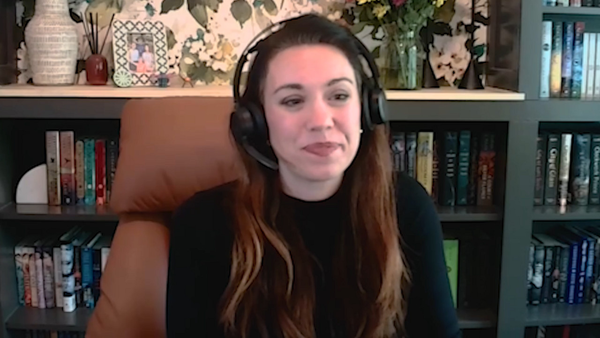
Join Emily Campbell (CMO, BlackLine) and Devon Briggs (Finance Transformation Leader, ATS Corporation) for a real-world story of how a transformation journey that started with a simple compliance problem became the foundation for something much bigger.
For a global company with over a hundred business units, solving for SOX compliance was just the beginning. This episode unpacks the playbook ATS used to look beyond the immediate need and build a long-term vision for value creation, freeing up their teams to focus on strategy, not spreadsheets.
Key Takeaways:
Expect insider insights you won’t find anywhere else:
The Catalyst Mindset: How to see compliance not as a cost center, but as an opportunity to drive long-term value.
Beyond the Basics: Why the team focused on journal entry automation as the key differentiator in their transformation.
A Risk-Based Revolution: The strategy for challenging the "preparer and reviewer" model for every journal to free up significant time.
The 80% Target: How ATS is pushing beyond 60% auto-certification to create a truly end-to-end automated workflow.
Don’t miss this practical guide to starting with a specific problem and scaling it into a company-wide strategic advantage.
Emily Campbell (00:07):
Hi, my name is Emily Campbell. I'm the Chief marketing Officer at BlackLine, and I'm excited to welcome you to our new podcast series. Sounds accurate. Our guest today is Dr. Christopher Sessar, the Chief Accounting Officer at SAP. Thank you so much for joining us today. We're thrilled to have you here.
Dr. Christopher Sessar (00:25):
Thanks so much. And it's really an honor to be the first in this great format.
Emily Campbell (00:29):
You know what I wanted to talk about first was a little bit around what's happening for the office of the CFO and particularly for the CAO, given some of the ever-changing environments that we're seeing, given the pace of regulatory technology and economic change, what are some of the key priorities that you're thinking about?
Dr. Christopher Sessar (00:50):
The frequency of change has completely changed since I have started my career as a young accountant at SAP. I mean, business models are nowadays much, much more disruptive than they have been many years ago. I mean, we at SAP are undergoing business model transformation, having become a cloud vendor from our old traditional on-premise license business. And that of course also has consequences for the finance function, but also for the role of a chief accounting officer at SAP. I think the areas we have to focus on today are very different ones than the ones we have to focus. When I started my career at SAP, and when I started the topic of standardizing processes and digitalizing tasks and responsibilities was certainly already somewhat of a topic what was not a big issue. And nowadays I would say it is really part of my daily life. I mean, my predecessor in my role as chief accountant did not have a special technical unit taking care about developing use cases for standardization digitalization, how we can also use AI in the, so to say, front desk of accounting in a corporate. I do have that today and must say it's of course also create fun to have also much, much more of a process perspective and less of only judging on certain accounting challenges and accounting questions. So in this regards, I would say the role has certainly changed a lot. I think we, as a finance function of SAP, we need to be faster, we need to be more standardized in order to really support our business best also in regards to their transformation of the business model.
Emily Campbell (02:58):
Yeah, it seems like the CAO role specifically has become far more strategic in the past, let's say 10 years than it was historically. How have you seen that change your approach to your role and how you think about your job on a day-to-day basis?
Dr. Christopher Sessar (03:18):
Again, I think the biggest change, which I really observe is that the role has become much, much more process oriented. I think the results which we have to deliver, the closing needs to get faster, smarter, and more intelligent. I think that was, I would say, less of a topic when I started my career. On the other hand, I think also this business partnering aspect has become more and more important. When I joined SAP, I think the stewardship role, having a close eye on compliance was always important, and that role exists still, but I think it has evolved. And today I would say we have three different roles to fulfill. It is still stewardship, so being the guardian of compliance in the organization and making sure that our financial statements are accurate and correct. But second, it's business partner, business partner to our sales organization, but also business partner to our product engineering group.
Dr. Christopher Sessar (04:28):
So we are co-developing with our product engineering group on our solutions. I always like to say we look at ourselves as customer minus one, so not even customer zero. We are very demanding customer, I must say. But in particular when it comes to areas such as ai, but also in the area of sustainability reporting, which of course also is a big and very noteworthy challenge for us. Also falling into my resort, we are coating with our development organization with the green lecture, but all of this AI solutions and trying to also business partners in this regards. And the third thing is being transformation agents, which is a little bit, I would say, although related to this partner business partnership roles, which basically means that we are not only following the transformation journey of our business, but that we're really also sitting in the driver's seat and that we are really also trying to drive transformation in the whole organization, not only in the finance part of the organization.
Dr. Christopher Sessar (05:37):
And in this regards, I think it has become much, much more strategic and of course also much, much more holistic because non-financial reporting has never been a big topic. When I started my career at SAP started pretty early also the integrated reporting strategy. But nowadays I would say we are even drivers also of SAP's sustainability strategy. And this of course also means that we have to provide our knowledge in regards to processes, in regards to governance when it comes to reporting on non-financial metrics like carbon impact, carbon footprint, because you need a solid governance for that as well. And I think there also we as accountants can hopefully help a lot.
Emily Campbell (06:28):
It's a really diverse set of reporting accounting around sustainability. The broad range of work that you're doing around product development, working with your sales and marketing teams, it's substantial. What advice would you give to a young accountant coming up or a finance young executive coming up? How would you advise them on what skills they need to be developing
Dr. Christopher Sessar (06:53):
That? I'm also giving lectures at the,
Emily Campbell (06:56):
Oh, there you go. Some people can pay to see
Dr. Christopher Sessar (06:58):
At the University of Digital. So I really try to also engage with young students. And that's of course a very good question. And I mean, I think we have to be careful also in the accounting regulatory record space that when we ask about skills that we don't ask for the best data scientists or experts in Python programming analytics, I don't think that we need that. But on the other hand, we of course still need all those competencies, which have already been important since many years. Analytical skills and technical accounting questions. I normally still start my lecture with some simple journal entries to remind people that this is a fundamental basis also every piece of technology is being built on. But then on the other hand, they do of course need some skills in being capable of using ai. They need an understanding of what AI can do also in the area of accounting, but maybe also what kind of the risks of it are and where you have to be also careful when you get results from AI to really be able to distinguish between is that something I can now trust on or is that something I cannot trust on?
Dr. Christopher Sessar (08:22):
And finally, processes. I think that was also not that much in focus when I did my studies, but it's also a focus area in my lectures at the University of Dissel toff to make people really familiar with processes. Because processes as much as accurate data is for me also a foundation for all our endeavors and ideas to digitalize services. And this is for me also something certainly worse to invest. But when I have also discussions with a German university professor always say, let's be careful not to be too technical because most of your students know much, much better how you use AI than we do. And they don't have to teach them on that. Most of it is anyways pretty much, but you rather should give them a good understanding of the framework, where you should use it, how you should use it, and also what the risks and barriers of it are.
Emily Campbell (09:24):
Yeah, so going back to what you said almost at the very beginning was getting people some of the foundational capabilities when you're doing your lectures. I love that because it's almost like learning how to do arithmetic when you're a child. If you know how to do the basic math, then even if you use a calculator later or use those tools, you know how it works. And I think AI is like that. It's wonderful to be able to use advanced AI to build new processes and build new capabilities, but if you don't understand the foundation, if you don't understand the underlying pieces, it can be very dangerous. And trust in your AI is really, really important. So as you consider ai, how are you thinking about leveraging AI in your organization and what do you think are some of the biggest opportunities and also some of the risks,
Dr. Christopher Sessar (10:21):
First of all, maybe what the additional thought, which also fits pretty well into that. I think what is maybe even for people of my generation more important than learning also that you always understand that you also have to unlearn in the AI is from my perspective, also one of those areas where you may have to unlearn to some extent to really understand how powerful it can be. Even if you ever used Excel for certain tasks and responsibilities in accounting, you may be using it forever, but unlearning in this regards means to simply go step back and say, no, let's think greenfield. We now have a different technology, and how can we leverage that technology to come to create a result? So I also like this concept of unlearning. I think for younger people it's maybe even more important that they, because the knowledge develops so fast and we have so many disruption in that very area that this concept of unlearning is maybe even a skill, which is also very important and it also resonates well to this whole artificial intelligence discussion.
Dr. Christopher Sessar (11:27):
So I mean, when we look at artificial intelligence at SAP, and in my department, I must say the least problem we have is that we don't have enough use cases. We actually do have much too many of those. The biggest challenge is to really pick the right ones, which are actually the most useful ones. So we have a concept in the SA finance organization, which is called the SAP finon. And the idea of this finon is first of all to make people familiar with AI technology. So they all do get access to an AI playground tool, which we have, and then they can simply try out things, but we don't leave them alone with that technology. And that goes also back to your question, but we also give them really educational sessions and training sessions about how you do good prompting, but also what are the risks and what you perhaps shouldn't do.
Dr. Christopher Sessar (12:28):
And when you perhaps shouldn't trust the results of ai, which is from my perspective, also very important. And then as an outcome of this finon, which has a little bit of a competition character, the idea is to produce use cases. And I'm totally convinced that for really finding meaningful use cases, you better ask those people who are on a daily basis working with reconciliation topics or with operational accounting, and there's a little bit of a competition they know about prompting and then they develop use cases. And guess what I mean, in my department, which is accounting, tax and external reporting, within only two weeks we established more than a hundred use cases from which I must say there was none where I would say it's not worth looking at it. And I think in the overall finance organization of SAP, it should be thousands. And now of course you have to make a choice and you have to make a decision which of those you are actually selecting. And that's certainly difficult. And let's be honest, certainly not all of those may be only a minority of those will ultimately also materialize. But I think it's an important learning opportunity for employees because they understand the power of ai. They also have the ability to judge the use cases which have been handed in by other employees. And I think that's part of this whole change management process. Also to make them familiar with what AI can basically do for them.
Dr. Christopher Sessar (14:12):
I mean for me as an accountant and also as a co innovator with our product engineering team, the most important thing also of trustworthy AI is basically two fundamental things. The first is the accuracy of data so that the data is correct, that the data is complete is not manipulated because that's the foundation for all the results which you get out of ai. And the second is, and I'm an accountant, that you have a really traceable result and that you have an audit proof result so that whatever solution you get gives you a context basically from an accounting memo or from authoritative literature about accounting. So how did the AI ultimately reach a certain conclusion? That's very, very important. And that's also feedback which we give to our product engineering folks to say, if it's not auditable, if it's not audit proof, then it's for us not really usable.
Dr. Christopher Sessar (15:17):
And I think that's certainly one of the areas where I think wouldn't say risk, but this is certainly something which always needs to be be considerate. And that's a little bit the downside of course, also of giving employees the full ability and the full access to all those tools. You need also governance and processes and controls that you don't create a kind of shadow AI kind of process organization within your community. So that's I think also, of course, dangerous. You can do that with training sessions, you can do that with education sessions, but it is of course something you have to be careful which data is uploaded, which data you better shouldn't upload, but also to really make sure that you don't simply accept black box results, which come out of an AI generative AI model, but that you really have a critical view on it and that you challenge it and that you ultimately still do some professional judgment and conclude on whether it's trustable or it's not trustable data.
Emily Campbell (16:21):
Yeah. Yeah. I think it's really fascinating and it comes back to that trusted AI perspective at SAP, obviously being an ERP company and in your role, it's obviously a very large company, but what advice would you give to maybe some of our customers who are just starting their AI journey? I love the finon idea, but maybe not everybody's quite ready for that, but do you have something that you would say, Hey, if you're just looking at ai, here's a place to start, or here's that step that you might take that feels safe.
Dr. Christopher Sessar (17:01):
Yeah, a couple of thoughts. First of all, don't start with a moonshot, but think about something which is digestible. I think oftentimes the smaller use cases are really the pretty ones. I mean via SAP had a use case, which was in the area, lot of lease accounting. That's a fun use case, which we have with BlackLine, but it was matching the data, which we get out of our lease contracts with what gets into lease accounting, which is a tiny little use case, but it was easy to implement, it didn't take super long. Everyone in the company understands what it's doing. It's matching our lease contract, all this paperwork with the parameters which go into the lease accounting and everyone immediately gets it. Yeah, that's an interesting use and understands why it's beneficial for the company. So I really like those small use cases a lot.
Dr. Christopher Sessar (17:56):
Second, I think many companies may be doing that, and we've been doing it at SAP as well, which is creating AI chatbots, and we did that in accounting and tax as well. So we uploaded our AI jet bot with thousands of paper internal accounting memos, text memos, our accounting policies, but also authoritative literature, which we had access to. That's of course also something you can start with, but I honestly don't think it gives you the most powerful results. It's rather investment into a foundational kind of topic because I'm always a little bit skeptical who is actually using that. If it's accounting professionals, they oftentimes have the answer already. I think genco AI use cases are in this regards really more promising to really look into where do you have a process which is high volume, and which involves maybe also less professional judgment, and then really try to establish in a gentech AI use case, I consider those chatbots as rather being maybe also generative ai, but I really strongly believe that agen AI is giving you better results.
Dr. Christopher Sessar (19:15):
And finally, I think it's really a good advice to simply try out and to not do it top down, but bottom up, I think that's really also proven at SAP that we kind of didn't say, well, you have to do this or that or this or that, or you have to implement this or that tool. But that we really asked our accountants and our regulatory P folks knowing best where the most burdensome processes at SAPR, what creates most pain for you, and do you think AI can help you there? Because that from my perspective, also gives the most tangible outcomes. I personally also did an exercise and asked my leadership team tell me about two or three processes where we are still doing Excel heavy lifting and we'restill having a lot of manual processes around. And that can also help to simply see, okay, where are we still heavily using?
Dr. Christopher Sessar (20:12):
Excellent. Also, at SAP, we are doing it and we identify two I must a interesting use cases. One is cashflow reporting, which is still manual, still happens in a huge Excel spreadsheet. And this from my perspective, is something which also can save a lot of time in getting our financial close a little bit accelerated. The second area can be goodwill impairment testing there. I also think there are so many different data sources you need to access and which you need to combine. I mean, ultimately there's also a lot of professional judgment involved in that. So I don't think that an AI will ever tell you, well, you have an impairment. You don't have an impairment, but it can collect the data, it can bring the data together, it can do the evaluation methods, and you can get it out of Excel where we also have it today.
Emily Campbell (21:05):
Yeah, it's amazing how much data is still housed in Excel. Again, I'll call back to what you said first, don't start with the moonshot, really pick some achievable AI transformation objectives and move forward. And also this idea of starting with at the bottom, letting people develop things and bringing it up as opposed to being a very tops down structure. I think you get a lot of creativity with people that are doing those tasks on a day-to-day basis and where they can look and see where process improvement and true transformation in the processes is really possible, leveraging generative of ai. So I think that's amazing. Let's shift gears a little bit and talk about the gold standard for record to report and the partnership between SAP and BlackLine. SAP is obviously the definitive system of record for many, many companies out there, and I think it's been complimented by what BlackLine has brought to the table and how you all have implemented BlackLine and SAP together. Tell me a little bit about that, and what do you think is working really well with the gold standard at SAP?
Dr. Christopher Sessar (22:18):
The, by far biggest advantage is that it is so complimentary and that BlackLine really supports our S four customers in areas such as account reconciliation. And this is by far, I think one of the biggest strength in this whole partnership. And this is also where we internally make most use out of that partnership and have established and implemented BlackLine use cases. It also depends, of course, on the customer's EIP landscape, on how the regulatory report processes are being set up at a customer. I think BlackLine can tremendously help, and I would say even in all phases in an S four migration project, as much as when once you have been going live with S four then, and with that, it's to me, as you said, absolutely complimentary.
Emily Campbell (23:20):
Yeah, we've seen a lot of customers that are moving to S four are actually implementing BlackLine first before they start their migration in order to accelerate the migration. So I think whenever you ultimately choose to implement, I think the two of them together are stronger, but it can ease some of the migration challenges in
Dr. Christopher Sessar (23:39):
Cases. And that would also be an advisor recommendation that to not start late and think about, okay, once we went live with S four, let's then in the second step think about implementing BlackLine. No, no, no. From my perspective, it should be precisely, as you said, use it at day one of the migration pass because it may accelerate your migration and also result in better outcomes. Clearly. Yeah,
Emily Campbell (24:09):
Yeah, yeah. So how does the partnership free up finance teams from chasing data and really allow them to focus on insights and activities that add more value to their company?
Dr. Christopher Sessar (24:22):
I mean, this is also what we clearly see with our implementation use cases. With BlackLine, we save time in our closing process that of course does free up capacity, which we can then use for other activities for more strategic tasks. And this is also absolutely my experience with the use of BlackLine, you get more accurate results, you free up capacity because you accelerate your closing process. And it of course also significantly helps you in the auditing process because the results which you get are typically having the character of being audit proof and much, much better to evidence than whatever you get out of manual tests of what you do in Excel. Spreadsheeting,
Emily Campbell (25:15):
I've heard that you have some really interesting use cases where you're actually using BlackLine at SAP. Do you want to give me a little bit of information about that? Tell me about pick a use case where you feel like you guys have really pushed the limit of how that SAP and BlackLine together is working.
Dr. Christopher Sessar (25:35):
Yeah, so first of all, what I also like a lot about BlackLine is you start somewhere and continuously identify more and more use cases. I'm also confident that this is our strategy in the use of BlackLine. We currently have two use cases, which are both, from my perspective, again, serving all those purposes, being faster, accelerating the close, but also improving quality and audit readiness. One is in the lease space where with the introduction of the new IFRS lease standard, we were facing some tough reconciliation challenge, which got resolved by the implementation of BlackLine with I think in the high 90, 98 or 99% accuracy rate, which is very, very strong. And then just recently we established a second interesting use case. SAP is invested in SFI venture funds, which is entities being consolidated to SAP. However, those entities do not report in an ERP system from SAP, but in a third party system.
Dr. Christopher Sessar (26:52):
And that's of course a great use case when it comes to reconciliation topics for our partnership and also for using BlackLine. And that's basically also what we did. So they are reporting US gap figures and we have to reconcile to our coop financial IFS numbers. And this has been done so far, always in Excel actually. And it was one of those use cases where also said, isn't that something where we have a much, much better automated solution? And BlackLine was the answer to that. And with the great support of BlackLine, we did a blueprinting. And I'm very confident that now in record time, we will go live with that get us gap to IRS reconciliation. And this again is of course for me as a chief accountant, what I'm always asking for, getting rid of Excels with manual formulas where you do reposts and have an audit proof system.
Dr. Christopher Sessar (28:00):
And this is what BlackLine brings to the table here. And hopefully again, we will go live with it in Q3 or early Q4 already. That's the beauty also about the product. There's certainly also at SAP, much, much more use cases, maybe we just should do something similar like the finon and consider where do we still do manual reconciliation at SAP, which we can replace, but by much, much smarter and more intelligent solution like BlackLine is. Maybe we should do that, but I'm very convinced that there's more very interesting, fascinating use cases waiting for being implemented.
Emily Campbell (28:40):
Yeah, I agree. I mean, I think that as you start to explore opportunities, more and more places become obvious for new use cases where you could potentially apply
Dr. Christopher Sessar (28:51):
And you have to share the success in the company. That's also what we are now doing to say, okay, look, that's how we did it in the past, and that's now how we are doing it with BlackLine and share our record report organization in our CFO community, but also in my department to maybe remind people to think about is there similar processes where BlackLine can further help us? And again, that's only two examples. I'm very convinced that there's more to come.
Emily Campbell (29:21):
Yeah, I think with the leasing example, I understand that that has been utilized across multiple countries, multiple currencies, and I think the idea that you can manage a very complex process is something that I was really interested in. So thanks for sharing that one. What is one key lesson or best practice that you would take away around SAP and how you're working with BlackLine or just a key best practice? I know you mentioned keep looking for new things, new use cases, but from the use cases that you've implemented either in terms of how you went about the implementation to start with or what you've learned, what do you think are some of the best practices that you've experienced so far?
Dr. Christopher Sessar (30:05):
First of all, it all starts with identifying meaningful use cases. And as that, I think you need almost vehicle for that to really wake up, maybe people to think about what are areas where we can do more. And then second, I was really fascinated about also how the teams work together. I think the implementation really went very, very smoothless. And although the teams are highly engaged with using plaque line and ultimately it's of course all about the results, accuracy and acceleration of the closing process and getting all the faster who the auditing process, that's I think what counts most. And if you can prove that, and if you can also show that to your colleagues in the accounting, in the text and in the regulatory report organization, I think that's to me what then will further accelerate the whole BlackLine adoption.
Emily Campbell (31:12):
Great. So final thought, close this out. You are thinking about where you are as a company, let's say with everything moving so quickly with ai, maybe five years out is way too far at this point, but give us a vision of what you think is going to be happening at SAP, let's say two years from now. How do you envision your team working and leveraging process changes ai? What would you envision?
Dr. Christopher Sessar (31:41):
So first of all, I think it is in many companies as it is an SAP of course, a capacity problem. And I don't think that in two years from now, we will have AI doing our whole closing process. I don't think that that's going to happen. On the other hand, I'm very confident that with the first steps we have been taking, we have been building a foundation to really make sure that we are able to free up capacity to deal with all the regulation challenges which we have ahead of us, and to free up the capacity also to focus on more strategic tasks and responsibilities. We all know and see how fast also large language models are developing things which you thought are not doable with AI a couple of months ago with a new version suddenly are. And in this regards, I mean, two years is a long timeframe. And I think it's also always worse to look back into, well, was there a certain scenario which you thought could be with the use of AI accelerated or improved or automated? But to reconsider that decision every once in a while to see, okay, is it now possible? Because again, this is so much of a fast moving target and things which you cannot do with AI today. Maybe you can do them tomorrow and two years from now,
Emily Campbell (33:13):
You have to keep unlearning in order to relearn. I love
Dr. Christopher Sessar (33:17):
That. That's
Emily Campbell (33:18):
Too, yeah, who knows what's going to be available next. It's evolving quickly, and it's pretty amazing. It's a great time to be in the industry and in finance and accounting. We'd like to thank our guest, Dr. Christopher Saar from SAP for joining us today on Sounds Accurate. Subscribe to our show anywhere you get your podcasts. Thanks, and we'll see you next time.